
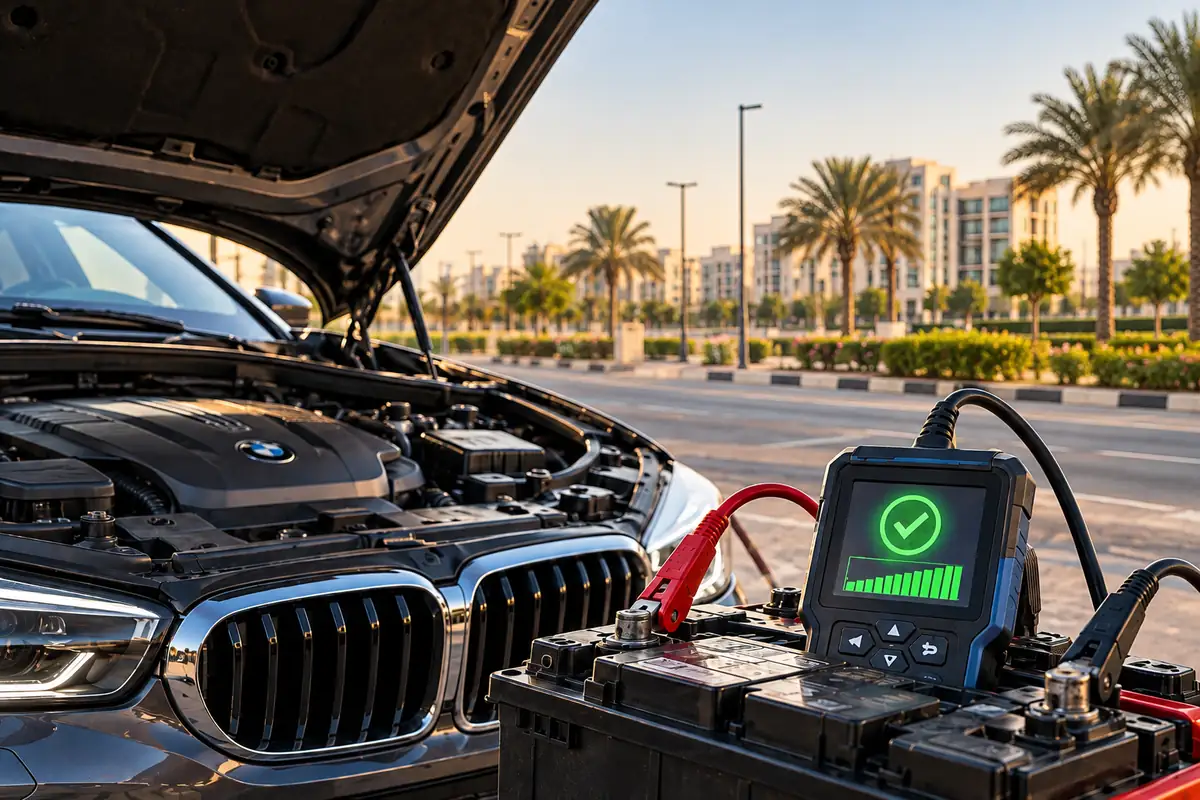
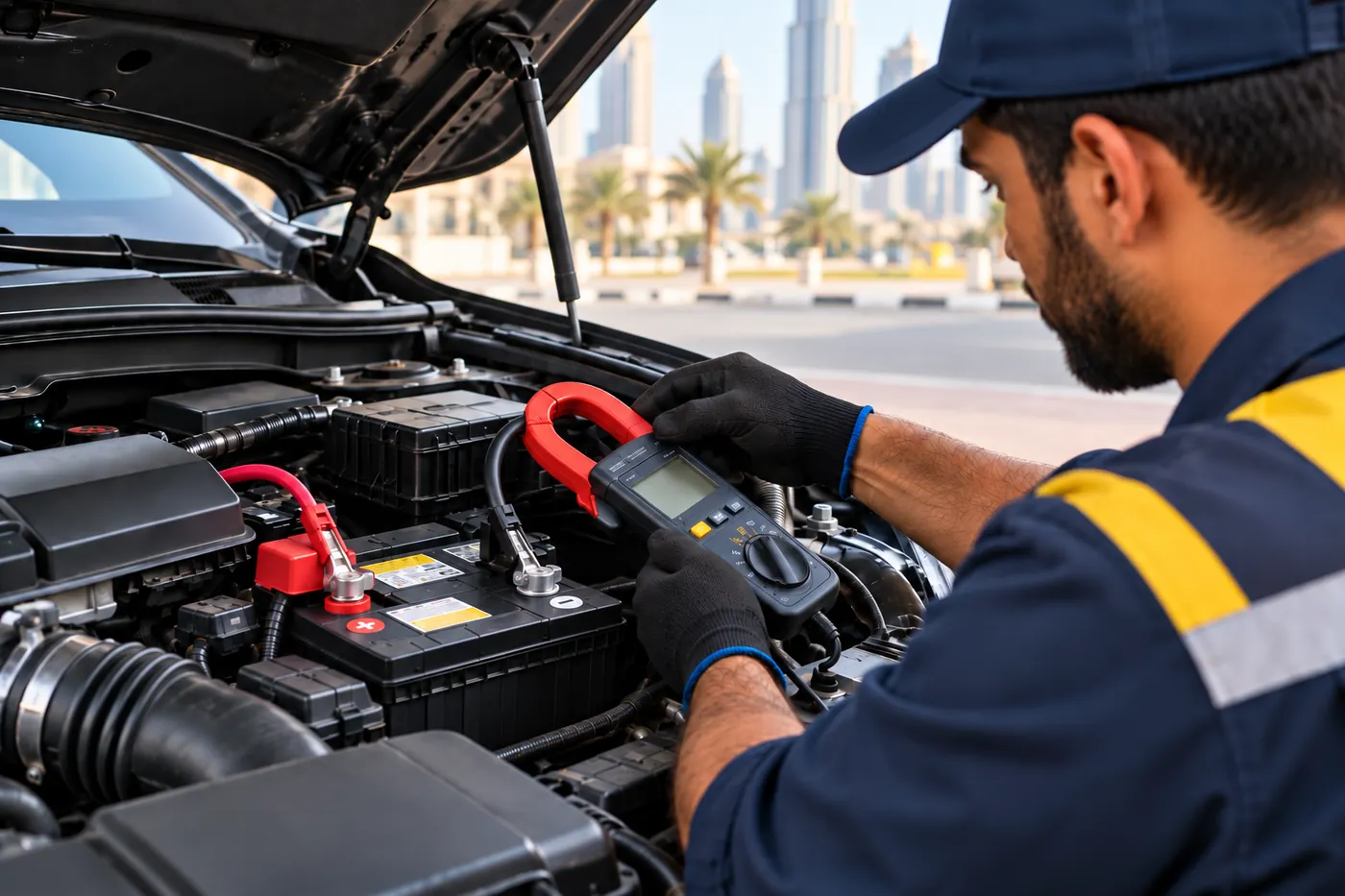
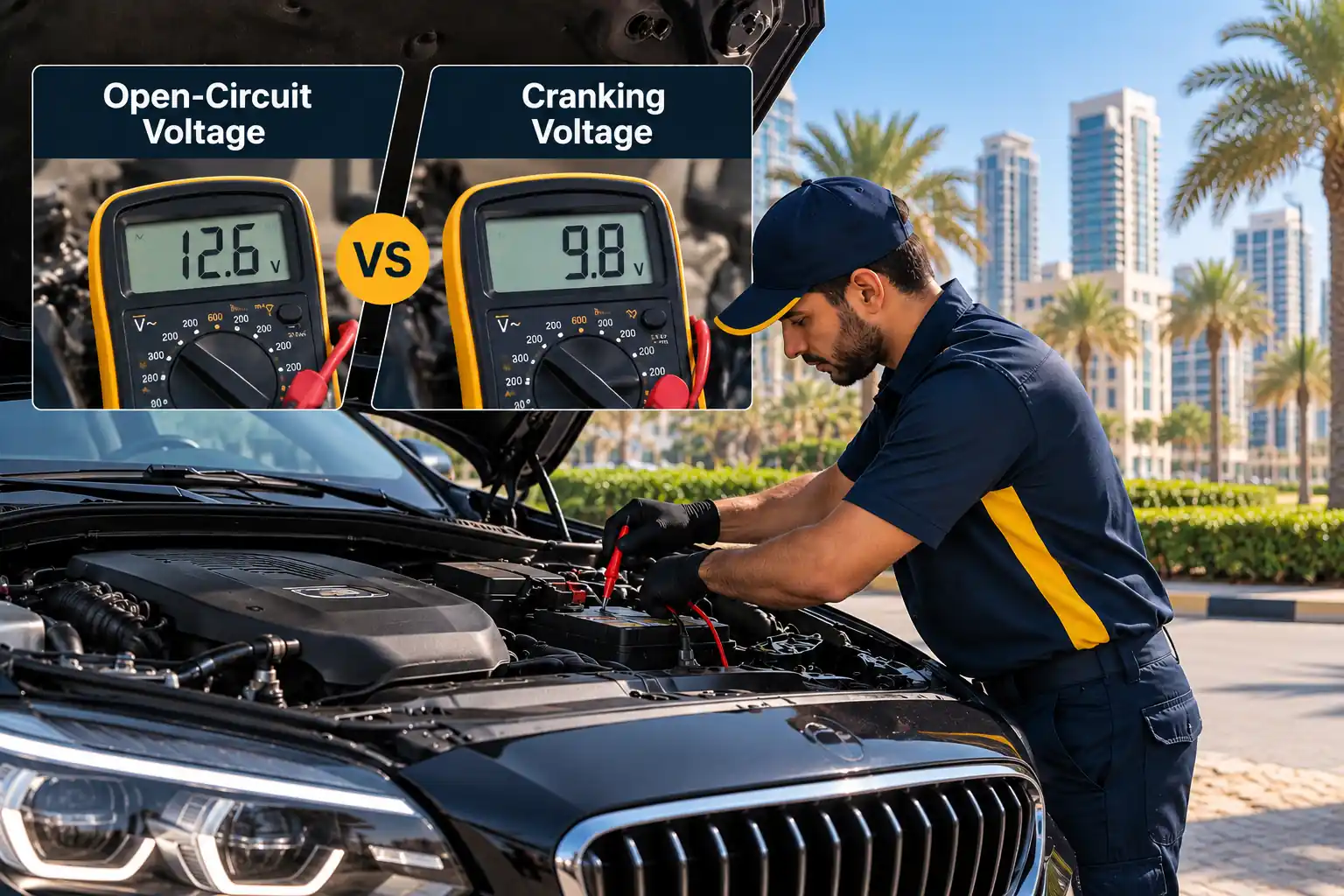



A car parked outside a Dubai office had passed its battery inspection just two days earlier. The tester showed a healthy result, and the engine started without hesitation. However, after several hours in the parking lot, the driver returned to find the vehicle completely unresponsive. The dashboard flickered, but the engine refused to start. A technician discovered that an intermittent battery connection was interrupting power delivery. After securing the connection and confirming proper starting performance, the vehicle started normally.
The incident explains why a battery inspection does not always predict real-world reliability. Even after a jump start service restores a vehicle’s operation, the battery or its surrounding electrical system may contain faults that were not present during the original inspection.
Why Passing a Battery Test Doesn’t Guarantee Reliability
A battery test measures performance under specific conditions at a particular moment. However, vehicle operating conditions change continuously.
A battery might perform normally when recently charged but struggle after several hours of inactivity. Similarly, loose connections or temperature-sensitive components may function correctly during inspection and fail later.
Therefore, a passing result confirms that the battery met certain testing requirements, not that every possible electrical problem has been eliminated.
Recently Charged Batteries Can Hide Developing Problems
One reason for misleading results is testing immediately after driving.
When a vehicle operates, its charging system replenishes battery energy. A battery with deteriorating storage capability may temporarily perform well because it has recently received sufficient charge.
However, after the vehicle remains parked, its limited energy reserves may become apparent.
For example, a battery could pass an inspection immediately following a long drive but struggle the next morning.
This doesn’t necessarily mean the testing equipment was inaccurate. The battery was examined under conditions that differed from those during the failure.
Intermittent Electrical Connections Can Escape Detection
Sometimes the battery itself is perfectly functional, but the connections delivering its power are unreliable.
Loose terminals, damaged cable strands, and deteriorated grounding points can produce intermittent starting difficulties.
Vehicle movement and engine vibration may temporarily change how these components make contact. A connection that works during inspection might become unreliable after driving.
Unlike permanent electrical faults, intermittent connection problems can disappear before a technician begins testing.
This makes examining the surrounding electrical circuit just as important as checking the battery.
Why Battery Testing Equipment Can Produce Misleading Results
Electronic battery testers rely on measurements and manufacturer specifications to evaluate performance.
However, incorrect battery information can influence the result.
For example, entering the wrong battery rating or selecting an unsuitable battery technology may affect the tester’s assessment.
Modern vehicles commonly use conventional flooded, enhanced flooded (EFB), or absorbent glass mat (AGM) batteries. Each has different characteristics and testing requirements.
Accurate results depend on selecting the correct settings and interpreting them alongside the vehicle’s actual symptoms.
These considerations become particularly relevant during a BMW Jump start, where the vehicle’s battery-management system and specified battery technology can influence diagnostic decisions.
Hidden Electrical Consumption After Parking
A vehicle may have a healthy battery and still experience repeated starting failures because electrical components continue consuming power after shutdown.
Modern vehicles maintain certain electronic functions while parked. However, a malfunctioning control module, improperly installed accessory, or defective relay may consume excessive electricity.
Interestingly, these problems may occur only occasionally.
A module might enter sleep mode correctly during one inspection but remain active after another shutdown.
Understanding this behaviour requires battery fault pattern analysis, particularly when the problem cannot be reproduced during a standard inspection.
Recording electrical consumption over an appropriate period can expose faults that a brief test misses.
How Temperature and Vehicle Usage Change Test Results
Dubai’s high temperatures create additional challenges for battery reliability.
Prolonged heat exposure accelerates chemical deterioration in lead-acid batteries. Although a battery may perform adequately during an inspection, accumulated damage can make its operation increasingly unpredictable.
Vehicle usage also matters.
Frequent short journeys, extended parking periods, and repeated electrical demands can create different battery conditions throughout the week.
Consequently, testing after a long journey may produce different findings from testing after several days of limited vehicle activity.
How Technicians Investigate a Battery That Passed but Failed
When a passing battery repeatedly causes starting difficulties, technicians should investigate the circumstances surrounding each failure.
Useful diagnostic steps include:
- Reviewing when the problem occurs and how frequently it returns.
- Confirming the correct battery type and testing specifications.
- Inspecting terminals, cable connections, and grounding points.
- Comparing battery behaviour before and after extended parking.
- Monitoring electrical consumption after vehicle shutdown.
- Checking whether charging performance changes under different operating conditions.
The objective is to reproduce the conditions responsible for the failure rather than repeating the same inspection without additional evidence.
Frequently Asked Questions
1. Can driving immediately before a battery test affect the result?
Yes. Recent driving can temporarily improve the battery’s charge condition. Testing after the vehicle has remained parked may provide additional information about its ability to retain sufficient energy.
2. Can a battery fail only after driving over rough roads?
Yes. Vibration can disturb loose terminals, damaged internal connections, or deteriorated cables. These faults may disappear when the vehicle is stationary, making them difficult to identify during routine inspections.
3. Can incorrect battery settings cause a misleading test result?
Yes. Entering an incorrect battery rating or selecting the wrong battery technology can affect the tester’s interpretation. Accurate testing requires information matching the installed battery.
4. Why should technicians record the exact time a starting failure occurs?
Timing helps identify patterns involving parking duration, recent charging, temperature, and electrical activity. These details can narrow down intermittent faults that might otherwise remain undetected.