
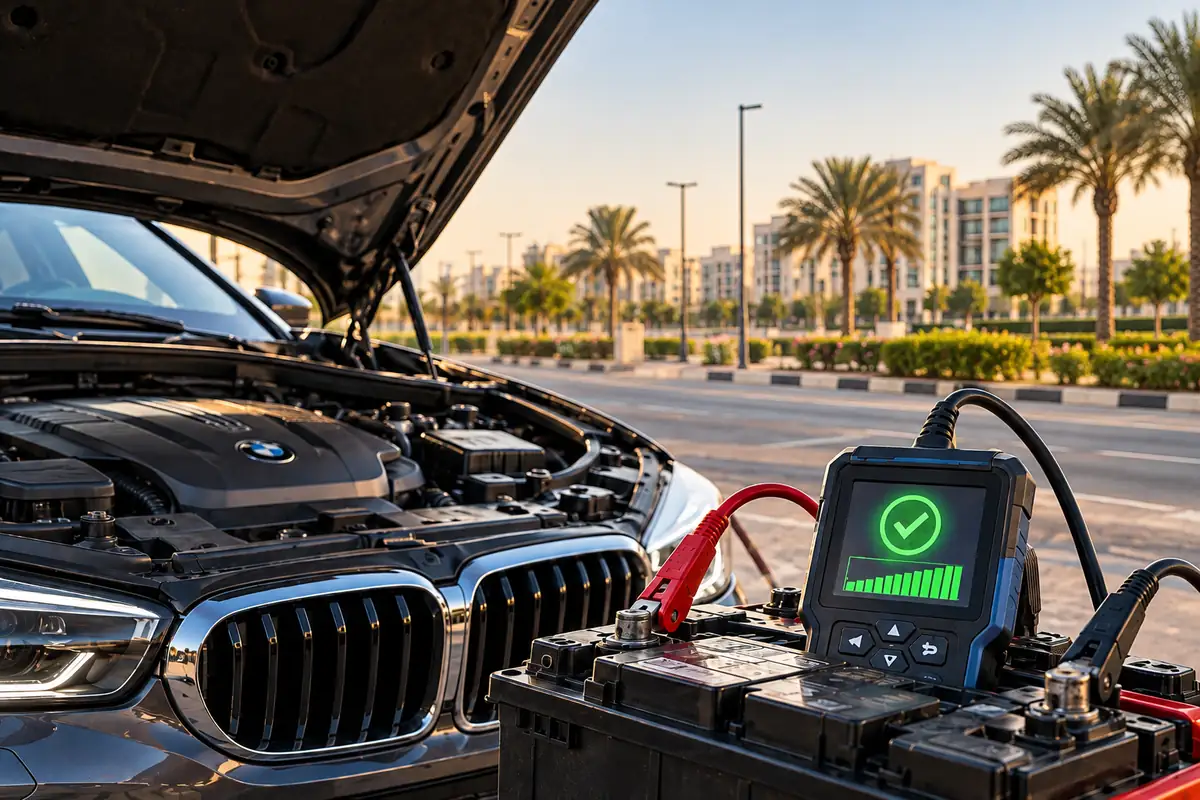

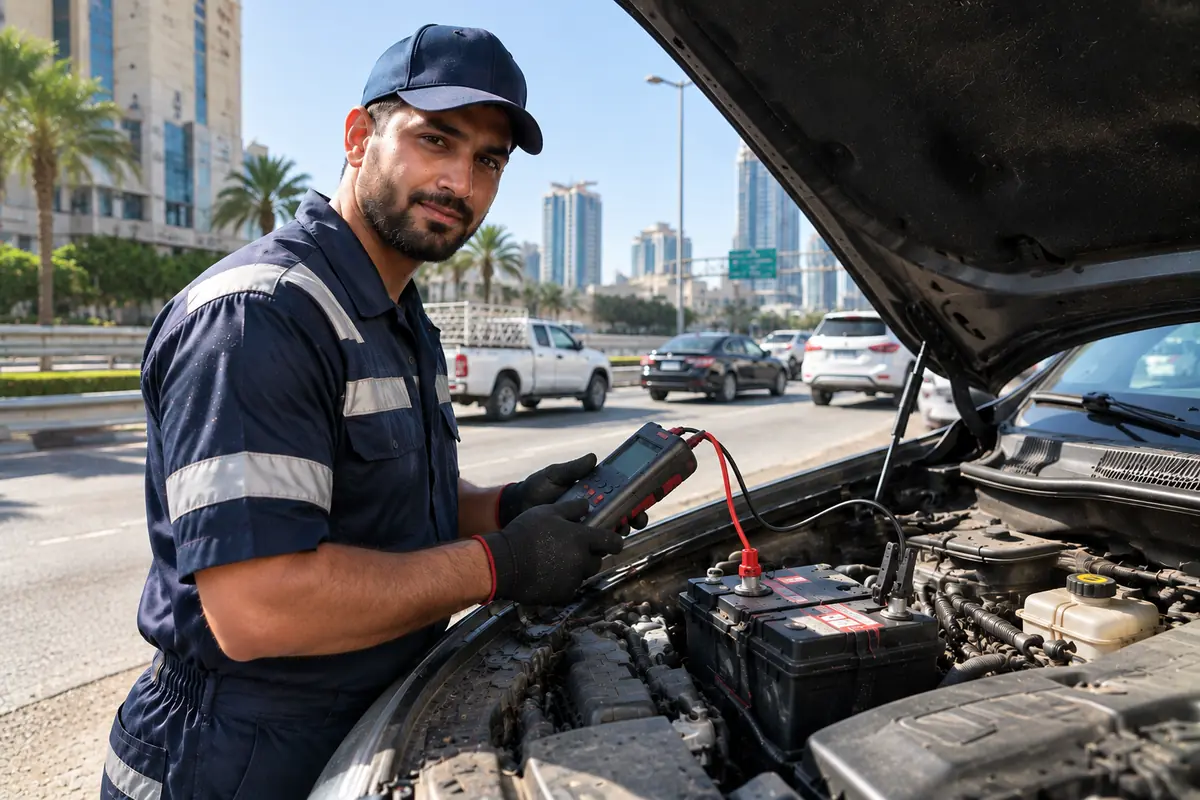



The car had been parked overnight, and everything seemed normal when the driver unlocked it the next morning. The dashboard illuminated, the headlights worked, and a multimeter showed more than 12 volts at the battery. Yet the moment the key was turned, the starter struggled and the engine refused to run. A jump start service got the vehicle running, but the more useful clue appeared during testing: the battery voltage looked acceptable while resting but dropped sharply when the starter demanded current. The problem was not simply whether the battery had voltage—it was how that voltage behaved under load.
This situation highlights an important distinction in battery testing. Open-circuit voltage and cranking voltage both provide useful information, but they measure the battery under very different conditions. Understanding what each reading reveals can prevent a seemingly normal voltage measurement from creating a false sense of confidence.
What Is Open-Circuit Voltage?
Open-circuit voltage, often abbreviated as OCV, is the voltage measured across the battery terminals when the battery is not supplying a significant electrical load.
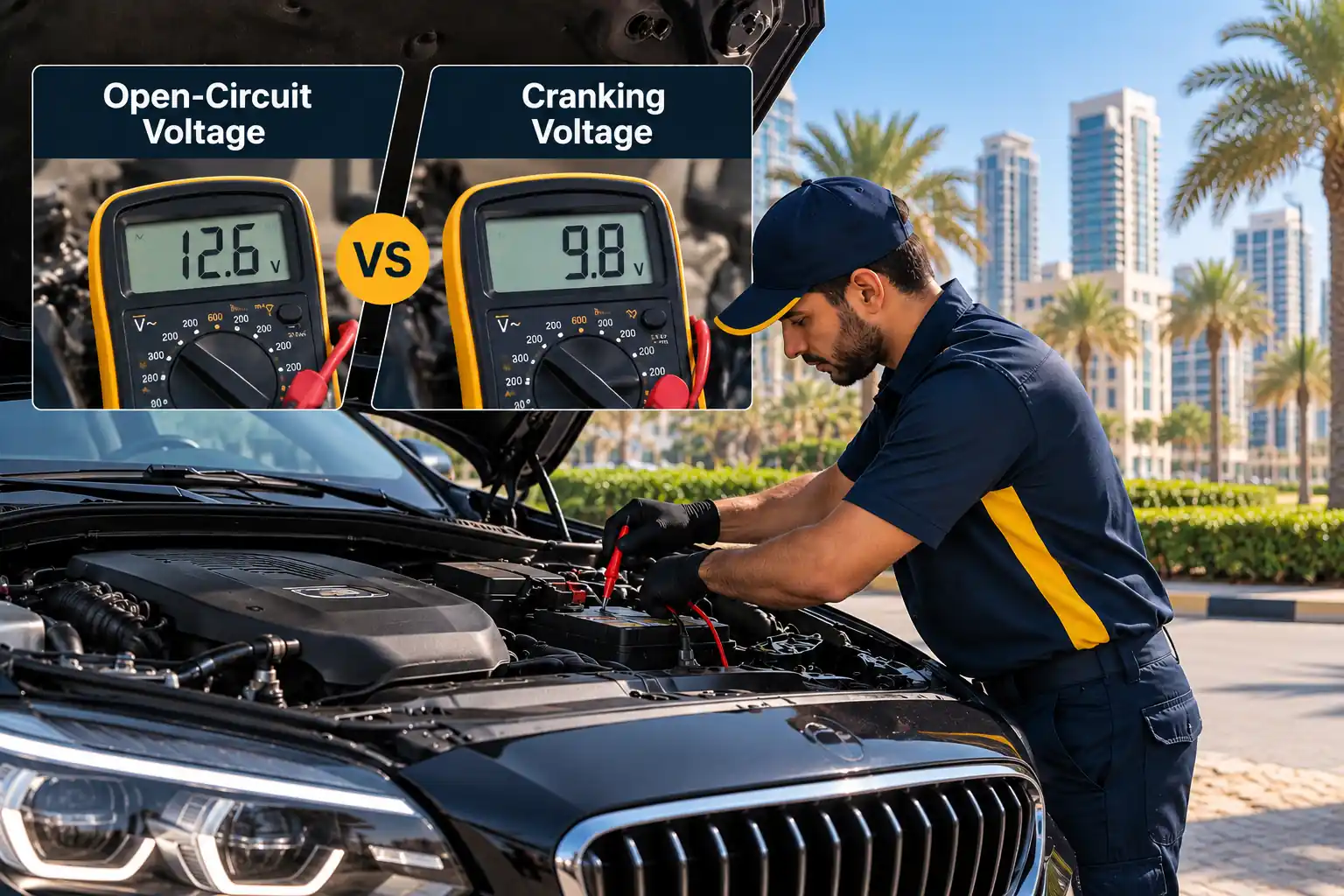
For a conventional 12-volt lead-acid battery, a fully charged resting reading is commonly around 12.6 volts or slightly higher. A lower reading can indicate that the battery is partially discharged, although the exact interpretation depends on battery chemistry, temperature, recent charging, and how long the battery has been resting.
OCV is mainly useful for estimating the battery’s state of charge. It answers a basic question: how much electrical potential is available while the battery is at rest?
However, that does not necessarily reveal how the battery will perform when hundreds of amps may suddenly be required by the starter motor.
Why Resting Voltage Can Be Misleading
A battery can display an apparently reasonable open-circuit voltage and still struggle to start the engine.
Voltage measured without a meaningful load places very little demand on the battery. An ageing or deteriorated battery may therefore maintain an acceptable terminal voltage while sitting idle. Once the starter engages, the conditions change immediately.
The battery must supply substantial current while maintaining enough voltage for the starter and vehicle electronics. Weak cells, poor connections, ageing internal components, or other electrical problems may become much more apparent at this stage.
This is why OCV should be interpreted as one part of the diagnostic picture rather than as proof that a battery is healthy.
What Is Cranking Voltage?
Cranking voltage is the battery voltage observed while the engine is actually being cranked by the starter.
Instead of examining the battery under resting conditions, this measurement captures its behaviour during one of the highest electrical demands it experiences in normal vehicle operation.
A healthy battery should experience a voltage drop during cranking—that is expected. The important issue is the magnitude and behaviour of the drop.
A commonly referenced guideline for a 12-volt lead-acid starting battery is that voltage should generally remain around 9.6 volts or higher during cranking under standardized conditions. However, this number should not be treated as a universal pass-or-fail threshold. Temperature, battery design, state of charge, starter current draw, vehicle specifications, and test conditions all influence the result.
What the Voltage Drop Can Reveal
Suppose a battery measures 12.6 volts after resting. On the surface, that looks encouraging. If it falls to approximately 10 volts while the engine cranks normally, its behaviour may be consistent with adequate starting performance.
Now consider the same resting voltage followed by a much deeper drop during cranking and slow starter operation. That difference is diagnostically important.
The resting measurement did not expose the weakness because there was almost no demand on the battery. Cranking created the electrical stress needed to reveal it.
This relationship is an important part of advanced battery diagnostics, because useful testing involves observing how electrical values change under different operating conditions rather than relying on one isolated number.
Is Cranking Voltage Always the More Important Reading?
Not in every situation. The two readings answer different questions.
Open-circuit voltage is particularly useful when checking charge level before further testing. If the battery is substantially discharged, that condition can affect later measurements and complicate interpretation.
Cranking voltage becomes especially valuable when investigating a vehicle that has enough apparent battery voltage but turns over slowly, intermittently struggles to start, or produces unusual electrical behaviour during startup.
Neither reading should automatically replace the other. Comparing them often provides more diagnostic information than treating either measurement independently.
Why Vehicle Electrical Systems Matter
Modern vehicles can behave differently from simpler starting systems because battery voltage is supporting several electronic functions at the same time the starter is drawing a large amount of current. A battery can therefore appear adequately charged while resting but behave very differently during ignition.
This distinction is especially useful when diagnosing vehicles with sophisticated battery-management systems. In a BMW, a starting problem may require checking how far voltage falls under starter load rather than relying only on the resting reading. The same measurement becomes valuable after a BMW Jump start, because getting the engine running solves the immediate no-start situation but does not explain why the battery struggled in the first place.
The vehicle manufacturer’s specifications and battery type should therefore be considered when interpreting measurements.
Cranking Voltage Does Not Diagnose Everything
A large voltage drop does not automatically prove that the battery itself is defective.
Excessive resistance at battery terminals, damaged cables, poor ground connections, or unusually high starter current can contribute to abnormal readings. A discharged battery can also produce weak cranking performance without necessarily being permanently damaged.
That is why voltage measurements work best alongside other diagnostic information. The objective is not simply to find a low number but to determine why that number appears.
Similarly, normal cranking voltage does not guarantee that every aspect of the battery is healthy. Certain developing problems may require additional testing before they become obvious during starting.
How to Interpret Both Readings Together
A practical diagnostic sequence starts by establishing the battery’s resting condition. Open-circuit voltage provides a useful baseline and helps identify whether low charge may be influencing the symptoms.
The voltage can then be monitored while the engine is cranked. Comparing the resting value with the lowest cranking reading shows how strongly the battery voltage responds to a sudden heavy load.
A battery that maintains good resting voltage but collapses excessively during cranking deserves further investigation. If both readings are low, insufficient charge may need to be addressed before conclusions are drawn. If battery voltage remains reasonable but the engine still cranks poorly, cables, connections, the starter circuit, and related components may require inspection.
The most useful reading therefore depends on the question being asked: open-circuit voltage helps establish resting charge condition, while cranking voltage provides a more direct view of battery behaviour during engine starting.
Frequently Asked Questions
1. How long should a battery rest before checking open-circuit voltage?
For a more representative resting measurement, the battery should ideally be allowed to stabilize after charging, driving, or significant electrical use. Recent charging can leave a temporary surface charge that makes the voltage appear higher than its settled value.
2. Can headlights working normally mean cranking voltage will also be normal?
No. Headlights generally demand far less current than the starter motor. A battery may operate lights and accessories normally but experience a substantial voltage drop when subjected to starter load.
3. Why does battery voltage recover immediately after cranking stops?
Once the starter disengages, the heavy electrical demand disappears. Terminal voltage can rebound quickly, even when the battery struggles during cranking. That recovery is one reason a measurement taken only before or after starting can miss useful information.
4. Can poor battery terminals affect the voltage seen during starting?
Yes. Loose, corroded, or high-resistance connections can contribute to starting problems and voltage loss. When cranking behaviour is abnormal, the battery terminals, cables, grounds, and starter circuit may need to be considered alongside the battery itself.