
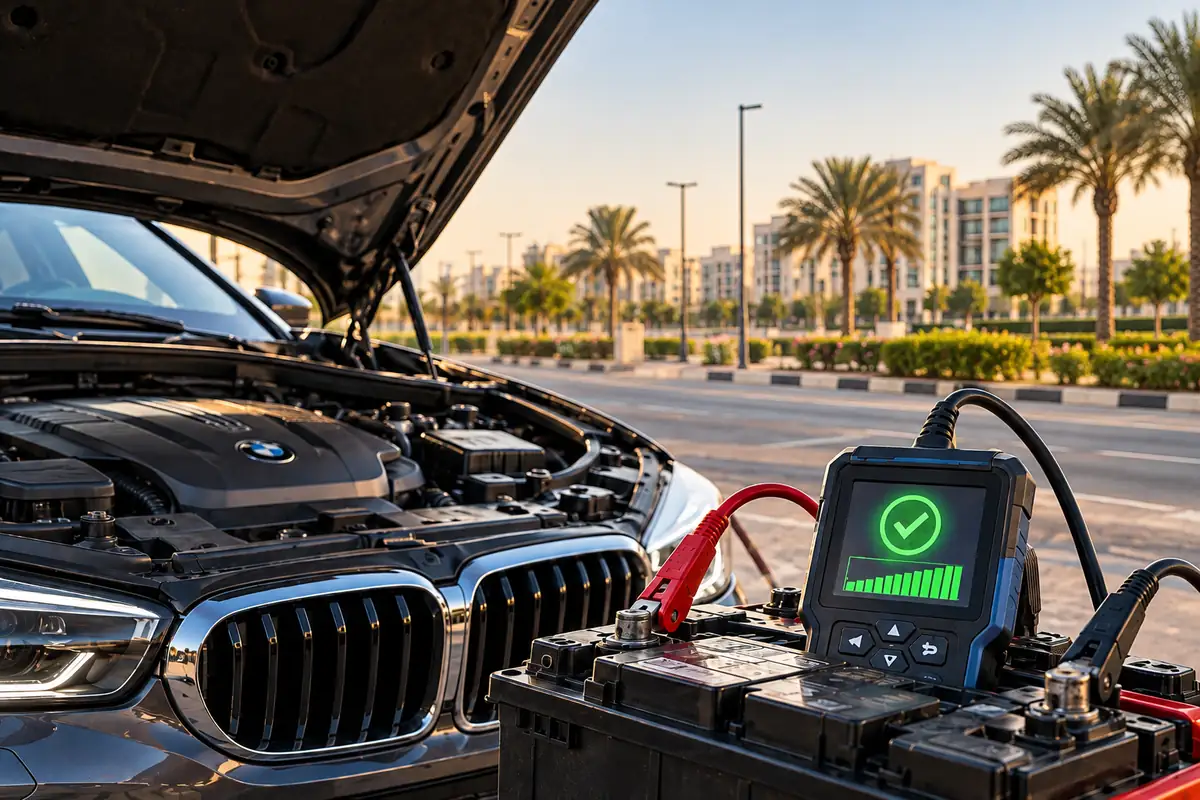
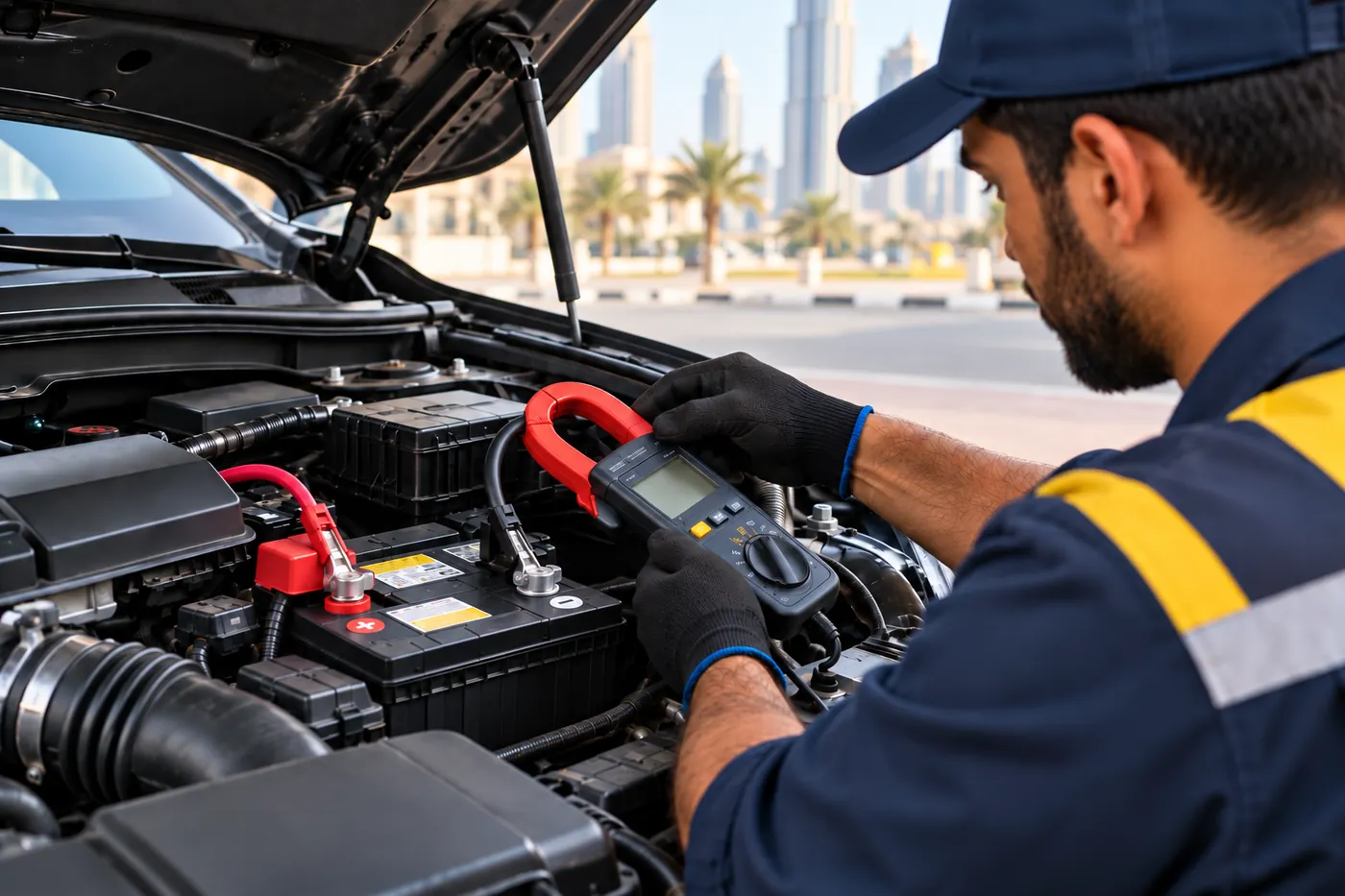
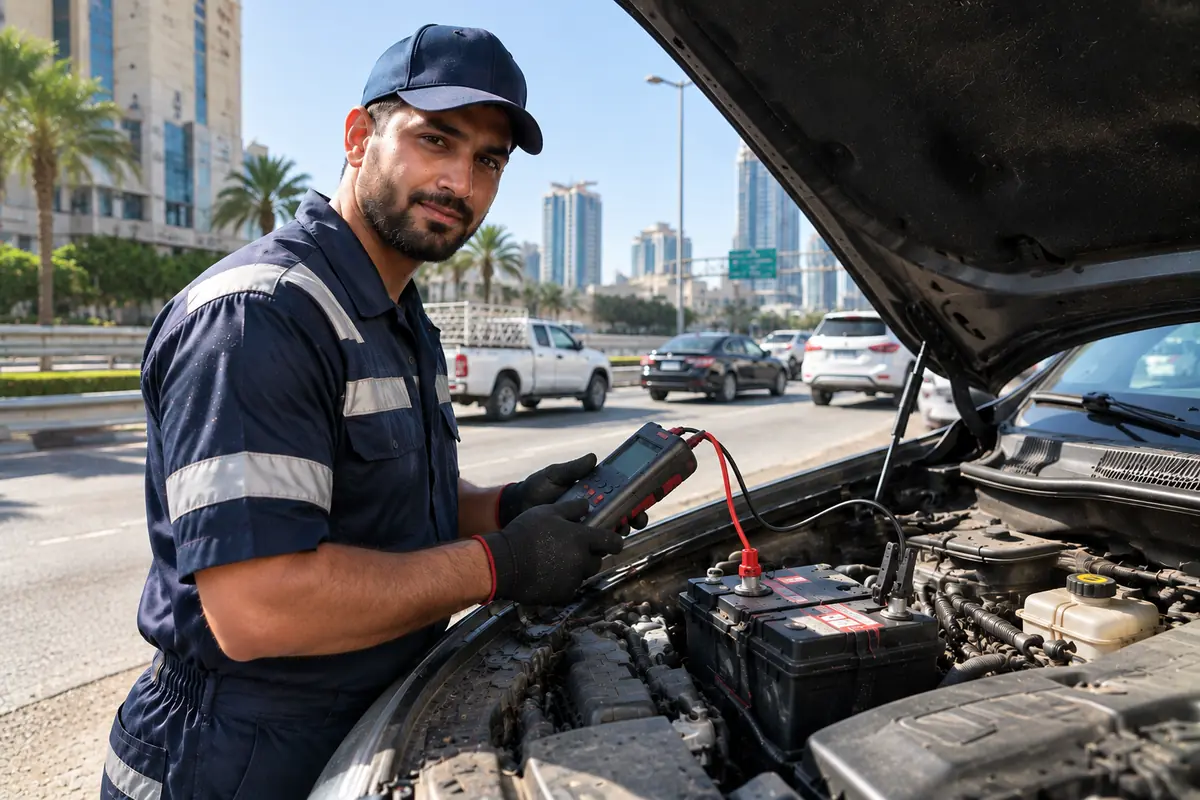
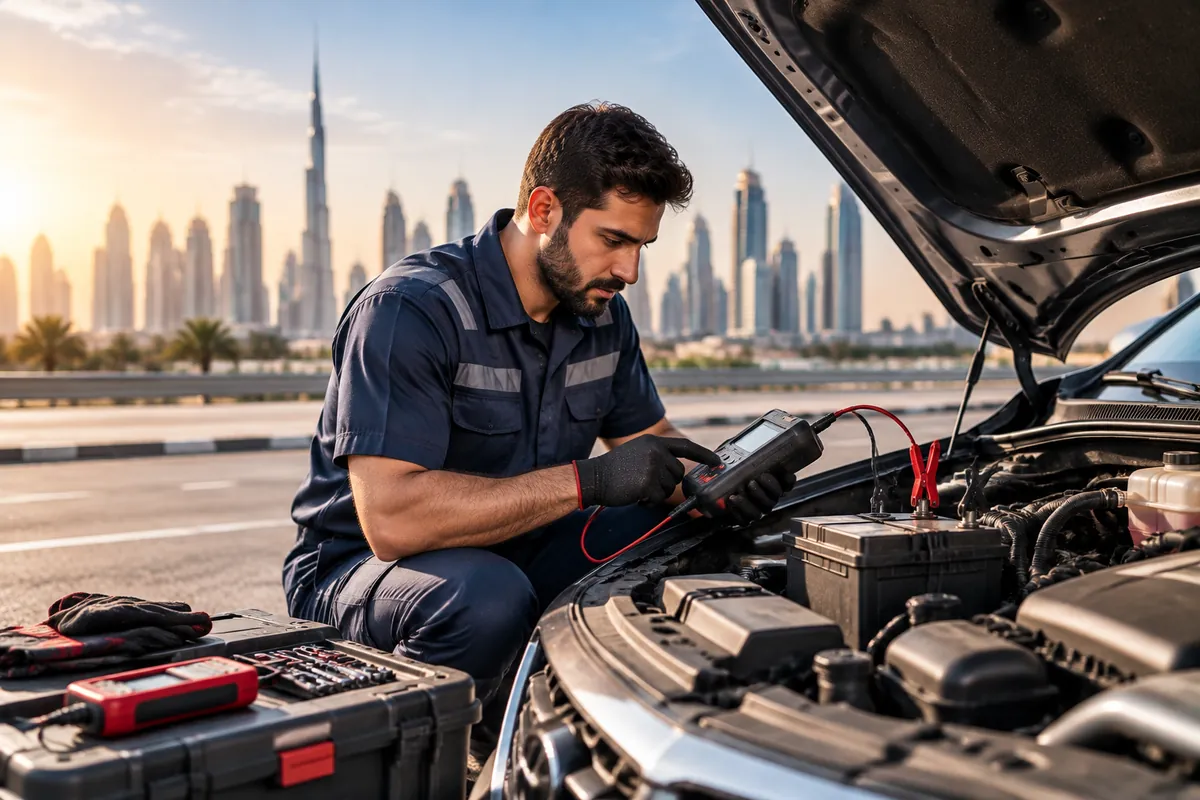
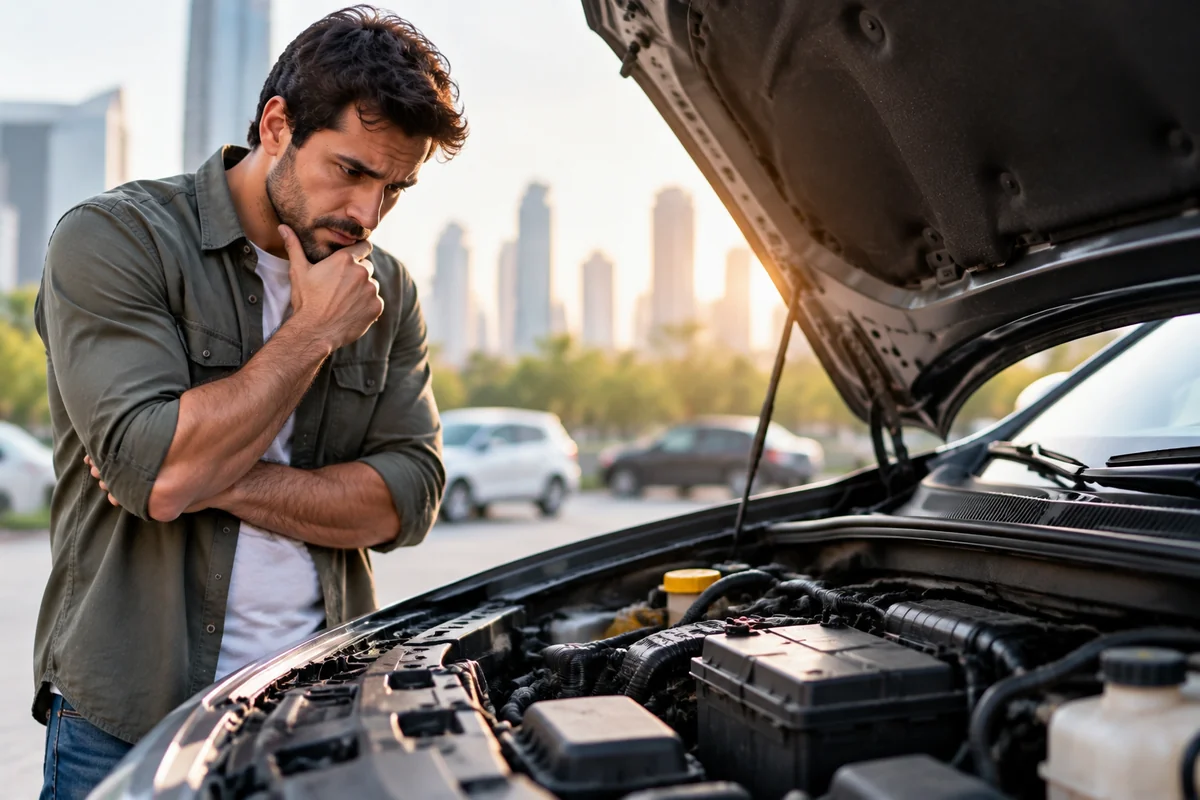

The car had started normally the previous evening, but the next morning the engine barely turned. The dashboard lights came on, yet every attempt produced a slow, heavy crank. A jump start service supplied additional battery power, and the engine eventually started, but the behavior raised an important question: was the battery simply weak, or was the starter motor demanding more current than it should? Testing the starter circuit under load showed unusually high current draw, leading the diagnosis away from the battery and toward a worn starter motor.
Situations like this are easy to misinterpret because a weak battery and a failing starter can create very similar symptoms. Both may cause slow cranking, clicking, dimming lights, or difficulty starting the engine. Starter current draw testing helps separate these faults by showing how much electrical current the starter motor actually requires while attempting to crank the engine.
What Is the Starter Current Draw?
Starter current draw is the amount of electrical current, measured in amperes, that flows from the battery to the starter motor during cranking.
When the ignition system requests an engine start, the starter motor must generate enough torque to rotate the engine against internal compression and mechanical resistance. This requires considerably more current than most electrical systems in the vehicle.
The exact current varies according to several factors, including:
- Engine size and design
- Petrol or diesel configuration
- Starter motor type
- Battery condition
- Engine temperature
- Oil viscosity
- Electrical cable resistance
Because vehicles have different specifications, there is no single current-draw number that indicates a healthy starter for every car. Manufacturer specifications provide the best reference.
Why Current Draw Helps Separate Battery and Starter Problems
A battery supplies energy, while the starter converts that electrical energy into mechanical rotation. Problems on either side can result in poor cranking.
Current measurement becomes particularly useful when combined with cranking speed and voltage behavior.
A weak battery may not be capable of providing the current demanded by an otherwise healthy starter. In contrast, a damaged starter may demand excessive current even when connected to a properly charged battery.
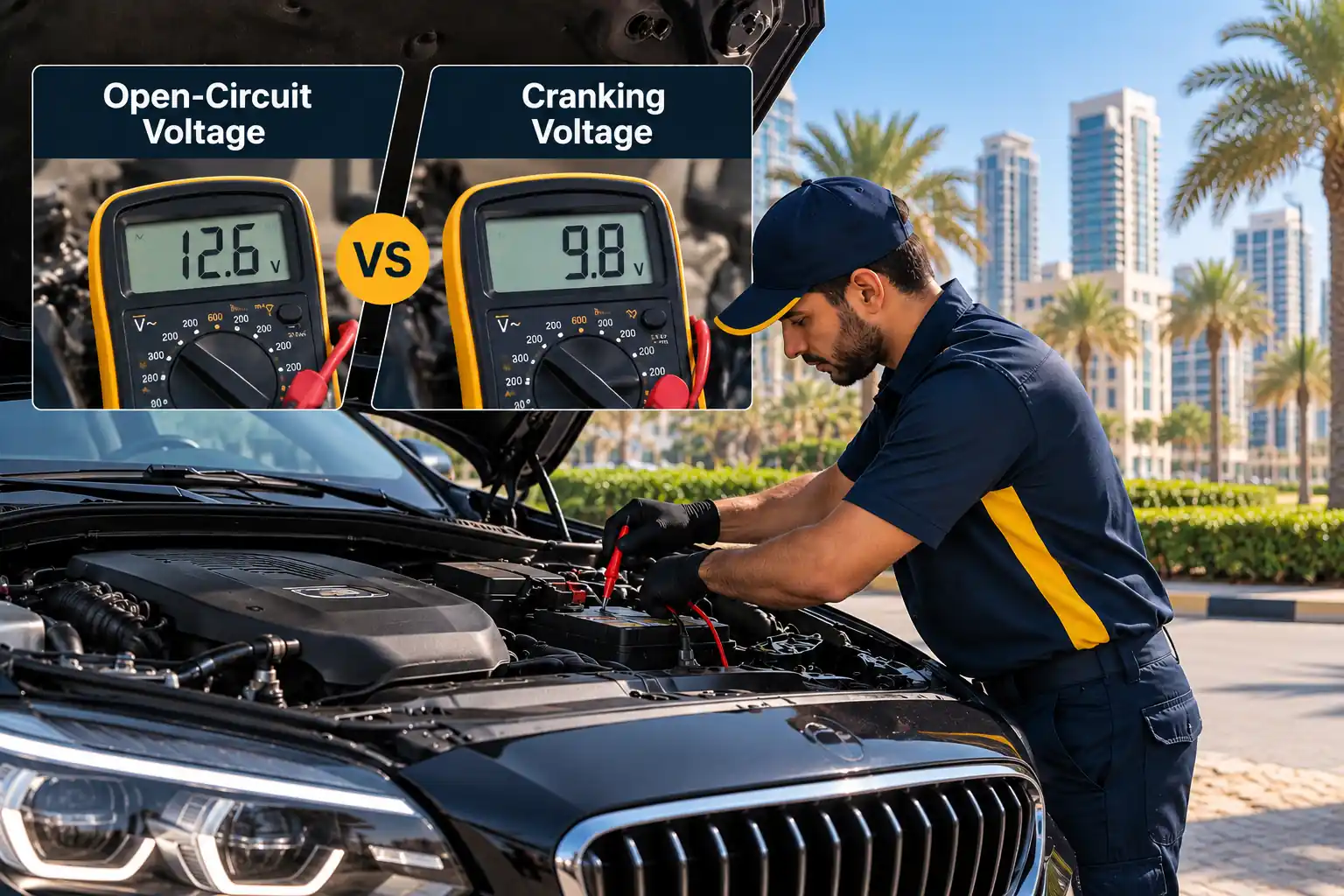
This distinction is important because simply seeing the voltage decrease during cranking does not identify why it happened. The current draw adds another diagnostic clue.
Low Current Draw With Slow Cranking
If the starter turns slowly while current draw is lower than expected, technicians may investigate:
- Weak electrical connections
- Corroded terminals
- Excessive cable resistance
- Starter solenoid problems
- Worn starter brushes
- Poor ground connections
Insufficient current may indicate that electrical power is not reaching the starter effectively.
Excessive Current Draw
A starter that consumes much more current than expected may have internal or mechanical problems.
Possible causes include:
- Worn starter bearings or bushings
- Internal starter motor short circuits
- Armature problems
- Mechanical binding
- Excessive engine resistance
High current demand places a heavy load on the battery and can make a healthy battery appear weak.
Current Draw Should Not Be Tested Alone
Starter amperage becomes much more useful when interpreted alongside other electrical measurements.
A technician may monitor battery voltage while simultaneously measuring current with an appropriate current clamp or diagnostic meter. Cranking speed can also provide valuable information.
This forms part of deep electrical diagnostics, where several readings are considered together rather than relying on a single number.
For instance, if battery voltage remains reasonably stable but the starter rotates poorly while drawing excessive current, the starter deserves closer inspection. If the battery voltage collapses severely while current delivery is limited, the battery or its electrical connections may require further testing.
The relationship between these readings often reveals more than any individual measurement.
How Cable Resistance Can Mislead Diagnosis
The starter circuit includes more than the battery and starter motor. Heavy positive cables, ground straps, terminals, connectors, and the starter solenoid all influence current flow.
A cable may look perfectly normal from the outside while corrosion develops beneath insulation or inside a terminal connection. Resistance at these points can restrict current and create slow cranking.
Voltage-drop testing across the positive and ground sides of the starter circuit can help locate this resistance.
This matters because replacing a starter will not correct a damaged ground strap or corroded battery cable.
Why Modern Vehicles Need Careful Testing
Modern vehicles can contain sophisticated power-management systems, start-stop technology, intelligent battery sensors, and extensive electronics. Starting problems therefore require more systematic diagnosis than simply deciding whether the battery is “good” or “bad.”
In some cases, when diagnosing a starting issue that initially requires external power, a technician may perform a BMW Jump start as part of the testing process. If the engine cranks successfully afterward, it still does not confirm that the battery was the only problem. The additional power may temporarily overcome excessive starter demand, poor electrical connections, or another weakness elsewhere in the starting circuit.
The starter system should therefore be evaluated according to the symptoms and measured electrical behavior rather than the outcome of one successful start.
Temperature Can Change Starter Current
Current draw can also change with temperature.
In cooler conditions, engine oil becomes more resistant to movement, and the starter may require additional torque to rotate the engine. Battery performance may also decline at lower temperatures.
Very high engine-bay temperatures can create a different problem. An aging starter can sometimes operate normally when cold but struggle after the engine becomes hot. Internal electrical resistance or worn components may behave differently as temperature increases.
This is why an intermittent hot-start problem may require testing under the conditions in which the fault actually occurs.
Mechanical Resistance Can Look Like Starter Failure
High starter current does not always mean the starter motor itself is defective.
If the engine is unusually difficult to rotate, the starter must work harder and naturally consume more current. Mechanical issues, incorrect oil viscosity, accessory drag, or internal engine resistance can therefore influence current readings.
A proper diagnosis considers whether the starter is creating the excessive load or simply responding to resistance elsewhere.
FAQs
1. Can a starter draw too much current and still crank the engine?
Yes. A deteriorating starter may continue rotating the engine while drawing significantly more current than normal. Starting may gradually become slower, particularly when the battery is not fully charged or the engine is hot.
2. Why does my car start when cold but struggle after driving?
Heat can affect worn starter components, electrical connections, and resistance inside the starter circuit. Testing current draw and voltage drop when the problem is present can provide more useful information than testing only when the engine is cold.
3. Can loose battery terminals affect starter current measurements?
Yes. Loose, oxidized, or contaminated terminals can restrict current flow and distort the apparent performance of the starter system. Connections should be inspected before interpreting test results.
4. Does a higher-amperage battery fix excessive starter current draw?
Not necessarily. A battery capable of supplying more current may temporarily improve cranking, but it does not correct an internally damaged or mechanically binding starter. The reason for abnormal current demand still needs to be identified.