
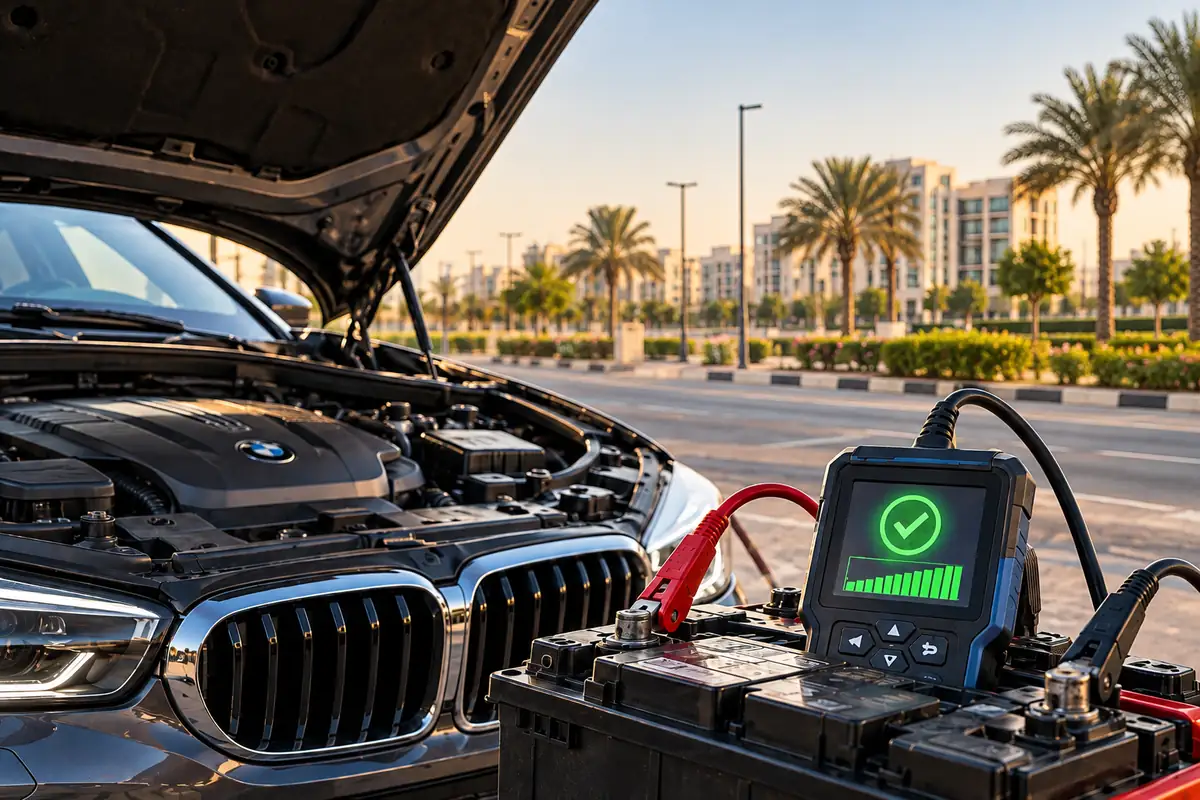
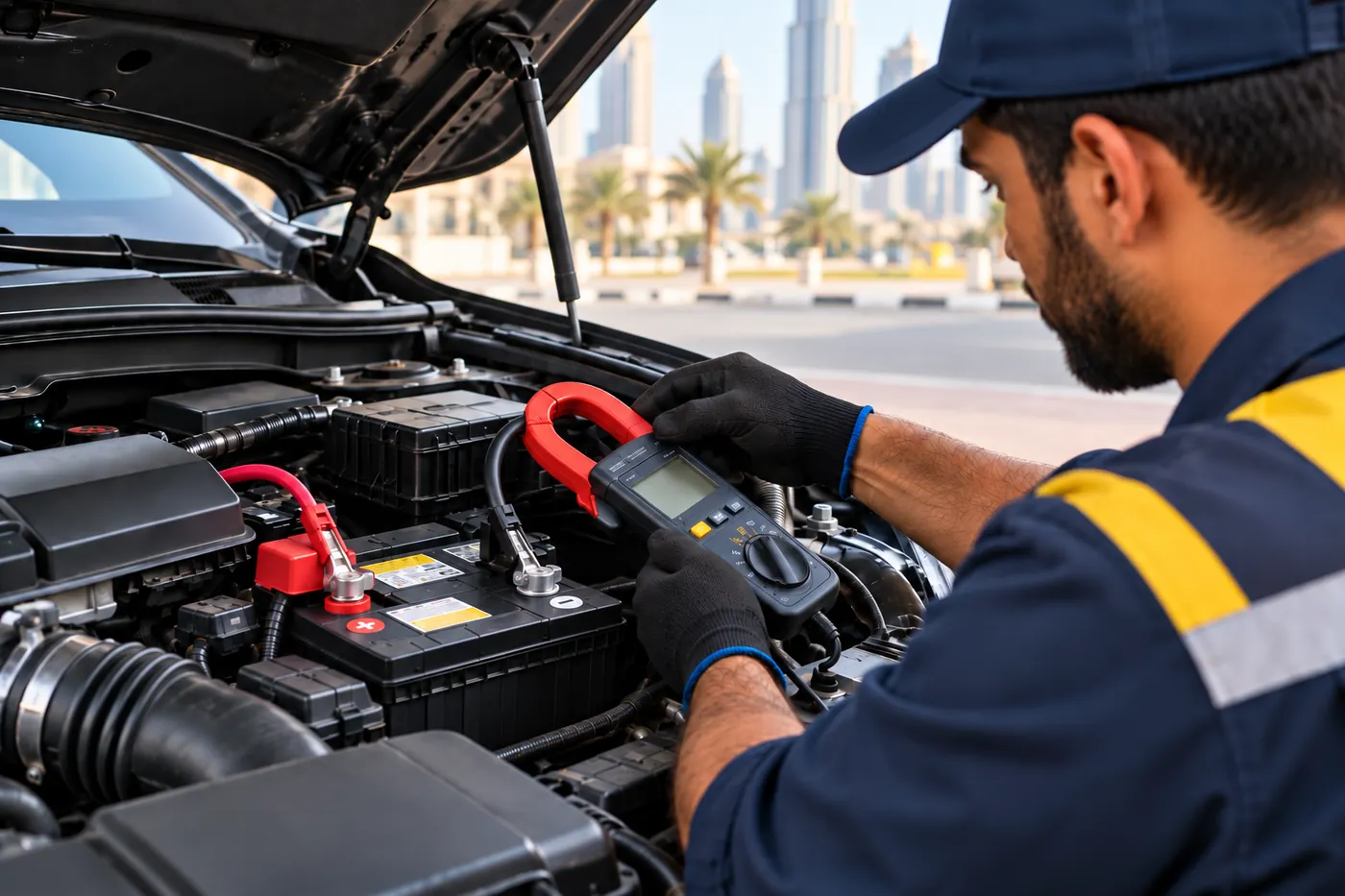
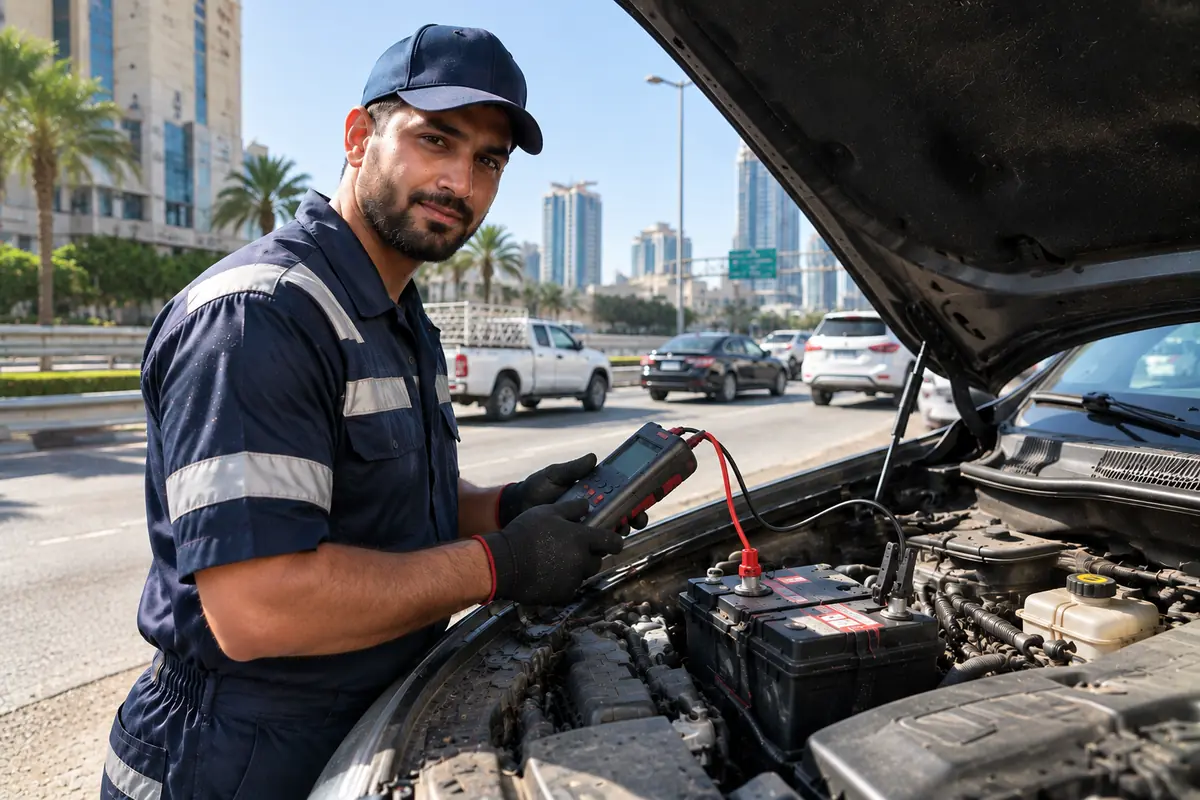



The car starts normally in the morning, runs perfectly through the day, and gives no obvious warning that anything is wrong. Later, after being parked for a few hours, the starter turns slowly and the engine barely comes to life. The battery indicator still appears normal, and a quick voltage check shows a reading that seems acceptable. Yet the same problem returns the next day. Situations like this show why checking a battery involves much more than reading voltage from a multimeter.
A jump start service can restore enough electrical power to get an engine running when battery voltage has fallen too low, but the reason behind the failure still needs to be identified. The battery may simply be discharged, or the problem could involve reduced battery capacity, excessive internal resistance, poor cable connections, abnormal starter current draw, or charging-system performance. Advanced battery diagnostics separate these possibilities through several different tests rather than relying on one measurement.
This guide explains how professional battery testing works, what the main diagnostic readings mean, and how different electrical tests work together to identify both obvious and hidden battery problems.
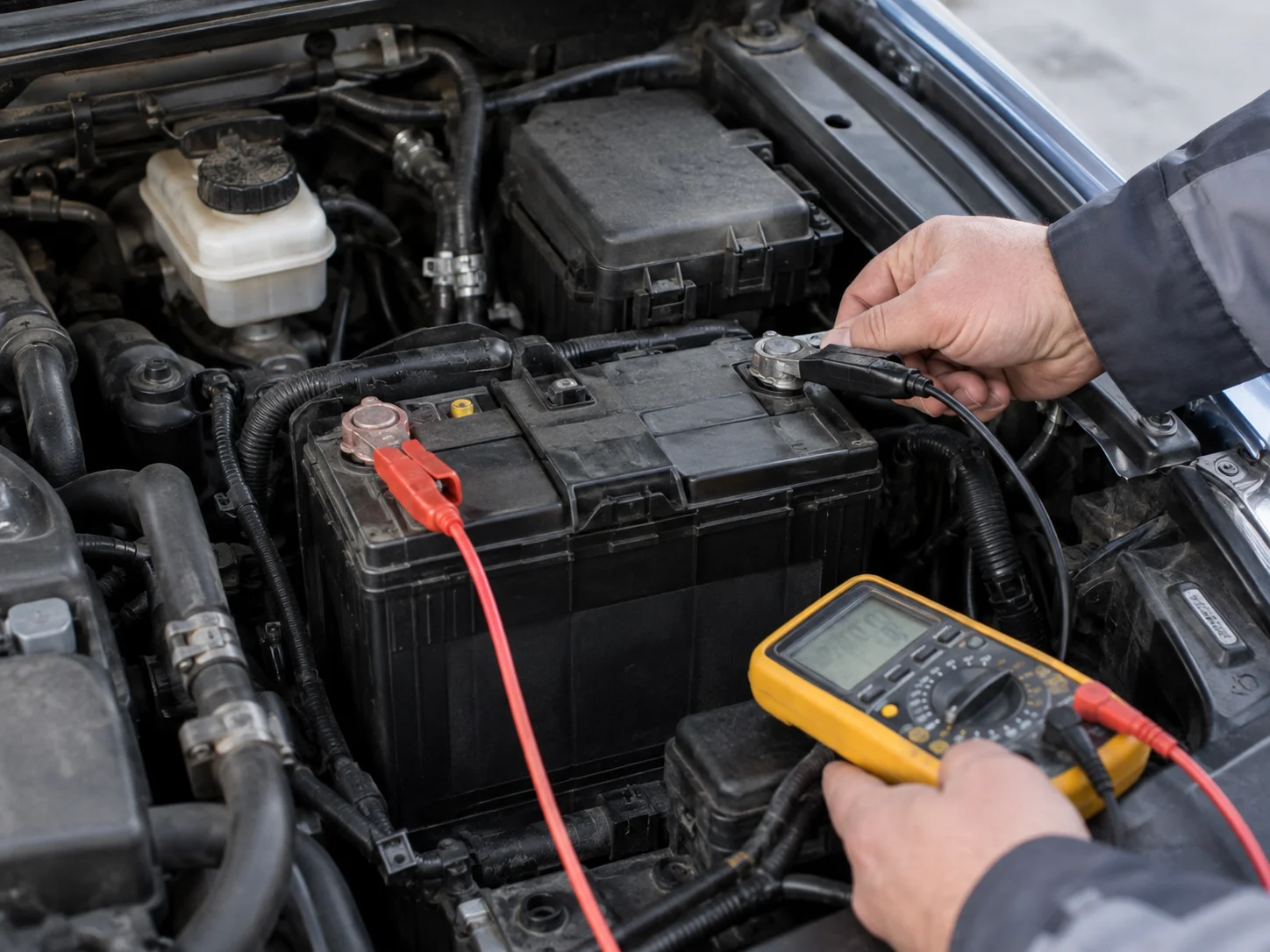
Why Advanced Car Battery Diagnostics Matter
A modern vehicle depends heavily on stable electrical voltage. The battery does more than crank the engine. It also supports control modules, sensors, security systems, infotainment equipment, and other electronics when required.
Battery problems can therefore appear in different ways, including:
- Slow engine cranking
- Intermittent starting problems
- Clicking when the ignition is engaged
- Electrical systems resetting
- Start-stop system warnings
- Battery warning messages
- Unexplained battery discharge
- A vehicle that starts normally on one occasion and struggles on another
The difficulty is that several electrical faults can produce similar symptoms. A weak starter motor can behave like a weak battery, while corroded battery terminals can create voltage loss even when the battery itself remains healthy.
Accurate diagnosis requires testing the complete starting circuit rather than assuming the battery is always responsible.
Understanding Battery Charge Level and Overall Condition
Two of the most important battery measurements are its current charge level and its overall condition.
State of charge describes how much electrical energy is currently stored in the battery. It is similar to checking how full a fuel tank is.
State of health, however, describes how well the battery can still perform compared with when it was new.
A battery can have a high charge level while still being in poor overall condition. For example, an aged battery may be fully charged and show acceptable open-circuit voltage but no longer provide enough current during engine cranking.
This difference between battery charge level and long-term battery health is one of the reasons voltage alone cannot confirm whether a battery is genuinely reliable.
Typical open-circuit readings for a rested 12-volt lead-acid battery are approximately:
- 12.6–12.8 volts: near full charge
- Around 12.4 volts: roughly three-quarter charge
- Around 12.2 volts: around half charge
- Below 12.0 volts: significantly discharged
These figures may vary depending on battery chemistry, temperature, battery age, and testing conditions.
Resting Voltage Compared With Cranking Voltage
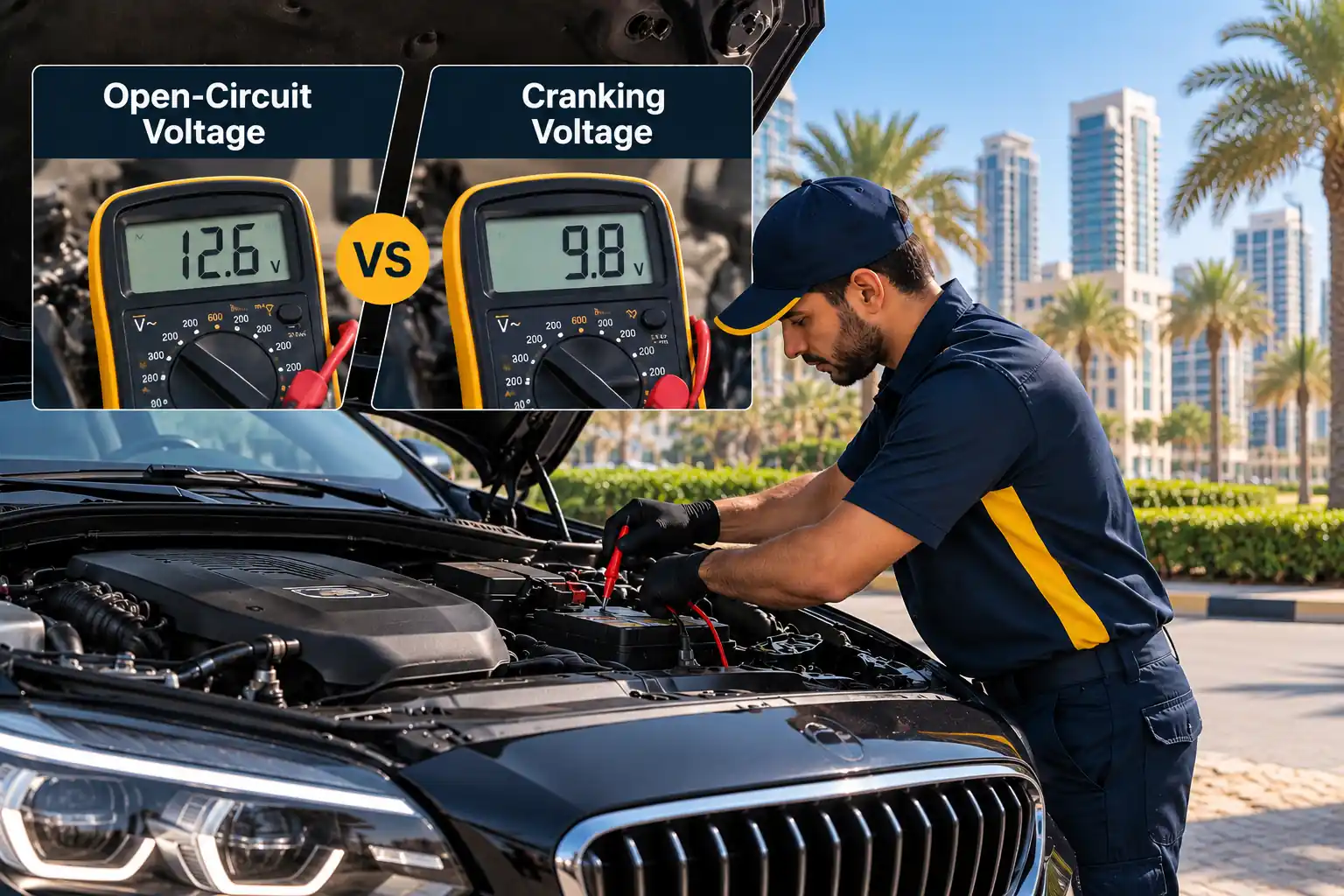
Open-circuit voltage measures battery voltage while the battery is resting and no major electrical load is being applied. It is useful for estimating the battery’s charge level, but it cannot fully reveal what happens during engine starting.
Cranking voltage shows how the battery behaves when the starter motor demands a large amount of current.
A battery may measure approximately 12.6 volts while resting yet experience a major voltage collapse once the starter engages. That drop can indicate reduced capacity, increased internal resistance, or deterioration inside the battery.
For many 12-volt automotive batteries, voltage should generally remain around 9.6 volts or higher during a controlled cranking or load test under suitable conditions, although manufacturer specifications, battery type, and ambient temperature should always be considered.
Comparing resting battery voltage vs engine cranking provides a much clearer picture than relying on either reading by itself.
Comparing Different Battery Testing Methods
Battery condition can be assessed using several diagnostic methods, and each provides different information.
Load Testing
A load test applies a controlled electrical load to the battery while monitoring its voltage.
The purpose is to simulate the heavy electrical demand created by the starter motor. If battery voltage falls excessively under the specified load, the battery may no longer be capable of supplying sufficient cranking power.
Conductance Testing
Electronic battery testers commonly use conductance technology.
Instead of applying a large sustained load, the tester sends a small electrical signal through the battery and analyses how the battery responds. From this data, the device can estimate battery condition and available cranking performance.
Conductance testing is fast and convenient, particularly for routine battery inspections.
Capacity Testing
Capacity testing measures how much usable electrical energy the battery can actually deliver over a controlled discharge period.
It can provide a deeper picture of battery performance, although it normally takes considerably longer than a conductance test or conventional load test.
Understanding different types of battery testing is important because no single test provides every answer. Results are most useful when interpreted alongside voltage measurements, battery age, symptoms, and starting-system behaviour.
How Internal Resistance Can Reveal Battery Deterioration
Every battery has a certain amount of internal electrical resistance.
As a battery ages, sulphation, plate deterioration, electrolyte changes, and other internal processes can increase that resistance. When resistance increases, the battery finds it more difficult to deliver a large amount of current quickly.
This creates a common diagnostic situation: the battery appears normal when no major load is applied, but voltage falls sharply as soon as the starter motor requires high current.
Measuring battery internal resistance as an indicator of hidden deterioration can therefore reveal problems that are not obvious during a simple voltage test.
Battery Internal resistance measurements are particularly useful when investigating intermittent starting problems that appear only during heavy electrical demand.
Separating Battery Problems From Starter Motor Problems
The starter motor is one of the largest electrical loads in a vehicle.
During engine cranking, it may draw hundreds of amps depending on engine size, temperature, mechanical resistance, and starter design.
If cranking voltage is low, the battery is not automatically the cause.
A starter motor with worn internal components, excessive friction, damaged windings, or another electrical fault may draw unusually high current. This excessive demand can pull system voltage down and produce symptoms that closely resemble battery failure.
On the other hand, normal starter current combined with excessive battery voltage drop may point more strongly toward a weak battery.
Measuring starter motor current draw alongside battery voltage is therefore an important part of separating a battery problem from a starter-system fault.
A complete starting-system test may consider:
- Battery resting voltage
- Battery condition
- Cranking voltage
- Starter current draw
- Cable resistance
- Ground quality
- Charging-system output
This broader testing approach is especially relevant when a BMW jump start gets the engine running but repeated starting difficulties continue afterward.
Testing Battery Cables and Ground Connections
Battery cables may appear perfectly normal from the outside while creating significant electrical resistance internally.
Corrosion, loose terminals, damaged cable strands, poor chassis grounds, and oxidised connection points can restrict current flow between the battery, starter, and vehicle electrical system.
A voltage drop test helps identify these losses while the circuit is under load.
For example, a technician can measure voltage between the positive battery terminal and the starter connection while the engine is cranking. Excessive voltage loss suggests resistance somewhere along that path.
The same testing principle can be applied to the negative side between the battery terminal, engine block, and chassis ground.
Checking voltage loss across battery cables and ground connections can uncover problems that ordinary continuity testing may miss because a damaged cable may still show continuity while failing under high current.
Why a Battery May Test Fine but Still Cause Problems
One of the more confusing battery faults occurs when a battery appears to pass an initial test but fails again shortly afterward.
Several factors can cause this.
The battery may be fully charged during testing but have reduced reserve capacity. Temperature can also affect performance significantly because battery output changes between hot and cold conditions.
Intermittent internal faults create another challenge. Plate damage or internal connection problems may appear only when the battery experiences vibration, temperature changes, or heavy electrical demand.
Testing conditions matter as well. A recently charged battery can retain a surface charge that temporarily increases its measured voltage.
Understanding why a battery may pass a basic test yet still fail during real driving conditions is important when diagnosing battery intermittent electrical problems.
Battery age, repeated discharge events, previous starting problems, resting voltage, load behaviour, conductance results, and charging performance should all be considered together.
Checking the Charging System
Repeated battery problems can also originate outside the battery itself.
Once the engine starts, the alternator must restore the energy used during cranking and supply power to the vehicle’s electrical systems while the engine is running.
If the charging voltage is too low, the battery may remain partially discharged. If charging voltage becomes excessively high, the battery can experience accelerated deterioration.
Modern charging systems can vary voltage dynamically based on battery condition, electrical demand, temperature, and engine-management strategy. This means one fixed charging-voltage figure does not apply to every vehicle.
Technicians may evaluate:
- Alternator output voltage
- Charging current
- Voltage under electrical load
- Alternator ripple
- Battery monitoring sensor data
- Charging-system fault codes
Testing the battery without checking the charging system can therefore leave the original cause unidentified.
Parasitic Drain Testing
A healthy battery that repeatedly goes flat after the vehicle is parked may have a parasitic electrical drain.
Vehicles continue using a small amount of electricity after shutdown to maintain systems such as security modules, clocks, and memory functions. Problems occur when an electrical component continues consuming more current than intended.
Possible sources include faulty control modules, lights remaining active, aftermarket equipment, wiring faults, or modules that fail to enter sleep mode.
Parasitic draw testing measures current consumption after the vehicle has completed its shutdown cycle.
Because modern vehicles may require time before electronic modules enter sleep mode, testing immediately after switching off the ignition can create misleading results.
Battery Testing Should Be Treated as Complete System Diagnosis
Professional battery diagnosis is not based on one voltage reading or one electronic tester result.
The most accurate assessment comes from combining information from the complete starting and charging system. The battery’s current charge level explains how much stored energy is available, while its overall health gives a better indication of remaining performance.
Load, conductance, and capacity testing reveal how the battery behaves under different conditions. Internal resistance can expose hidden deterioration, while cranking measurements show how the battery responds to actual starting demand.
Starter current testing helps distinguish battery faults from starter-motor problems, while voltage drop testing can reveal resistance inside cables, terminals, and ground connections. Charging-system and parasitic-drain tests then determine whether another electrical problem is repeatedly affecting the battery.
Together, these diagnostic methods provide a much clearer explanation of why a vehicle starts normally, cranks slowly, fails intermittently, or repeatedly loses battery power.
Frequently Asked Questions
1. Can a car battery show 12 volts and still be bad?
Yes. Resting voltage only shows part of the battery’s condition. A deteriorated battery may display reasonable voltage without a load but experience a major voltage drop when the starter demands high current. Load, conductance, cranking-voltage, and internal-resistance testing can reveal problems that a basic voltage reading may not detect.
2. What is the difference between battery charge and battery health?
Battery charge describes how much energy is currently stored in the battery, while battery health reflects its ability to continue performing compared with its original condition. A battery can be fully charged while still having poor health because ageing has reduced its capacity or cranking ability.
3. Why does my battery keep going flat even after charging?
Repeated discharge can result from several causes, including a weak battery, insufficient alternator charging, parasitic electrical drain, poor battery connections, or frequent short-distance driving that does not restore enough energy. Testing the battery together with the charging system and parked-current draw can help isolate the cause.
4. How can you tell whether the battery or starter is causing slow cranking?
Battery voltage and starter current draw should be measured during cranking. A weak battery may show excessive voltage drop under a normal starter load, while a failing starter can draw abnormally high current and pull system voltage down. Cable and ground voltage-drop testing is also important because excessive resistance in these connections can produce similar symptoms.