



Picture this: you walk up to your EV, phone in hand, and nothing. The door won’t unlock, the screen’s dead, the app just spins. No crank, no click, an electric car doesn’t fail the way a petrol one does. It simply goes dark, and for a second, it feels like the whole car has bricked itself.
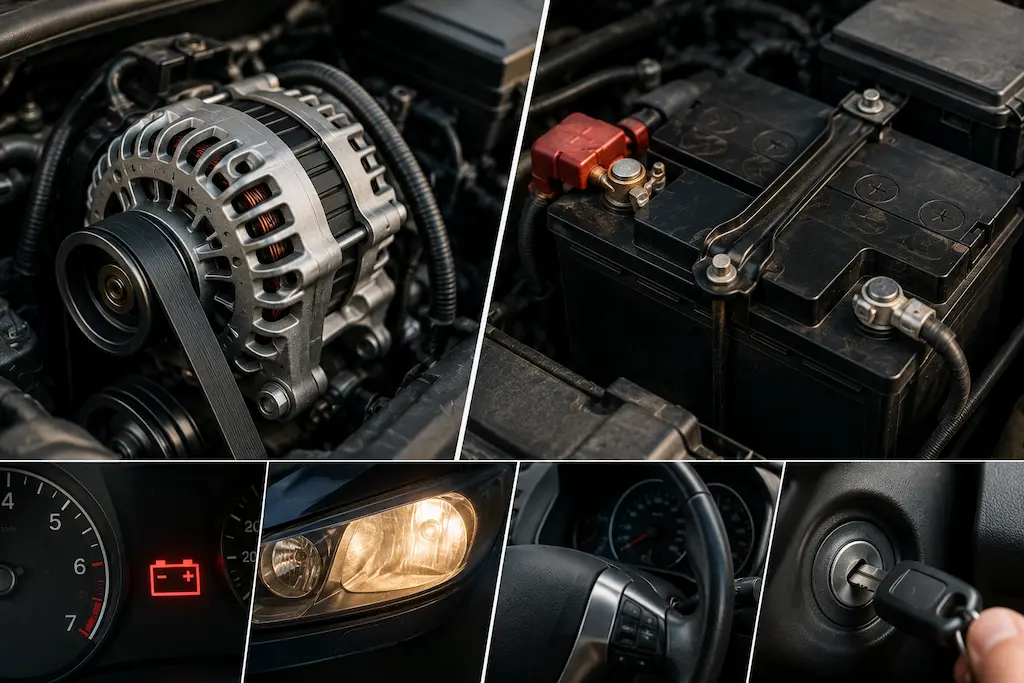
Here’s the reassuring part, and the thing most drivers don’t realise in that moment: nine times out of ten, it isn’t the big, expensive battery that powers the motor. It’s the small 12-volt battery tucked away running the locks, lights, and screen the same humble battery a normal car has. Once you know that, a dead EV stops being a panic and becomes a fixable problem.
So let me walk you through it the way I’d talk you through it on the roadside, which battery actually matters, how to revive it safely, and the moment it’s smarter to call for help than to risk a costly mistake.
Before Jump-Starting: Safety Comes First
A few basic precautions make all the difference when you’re dealing with a vehicle’s electrical system. Switch the vehicle fully off, work on a flat, stable surface, and wear insulated gloves if you have them. Keep clear of the high-voltage (usually orange) cabling entirely, and never let the two cable clamps touch each other. With EVs, caution isn’t optional if systems carry far more energy than a conventional car.
1. Understand the EV’s Power System First
Before doing anything, it helps to know what actually powers your car. Every EV has two separate batteries:
- A high-voltage battery that drives the motor is sealed, dangerous, and never something you jump-start or touch.
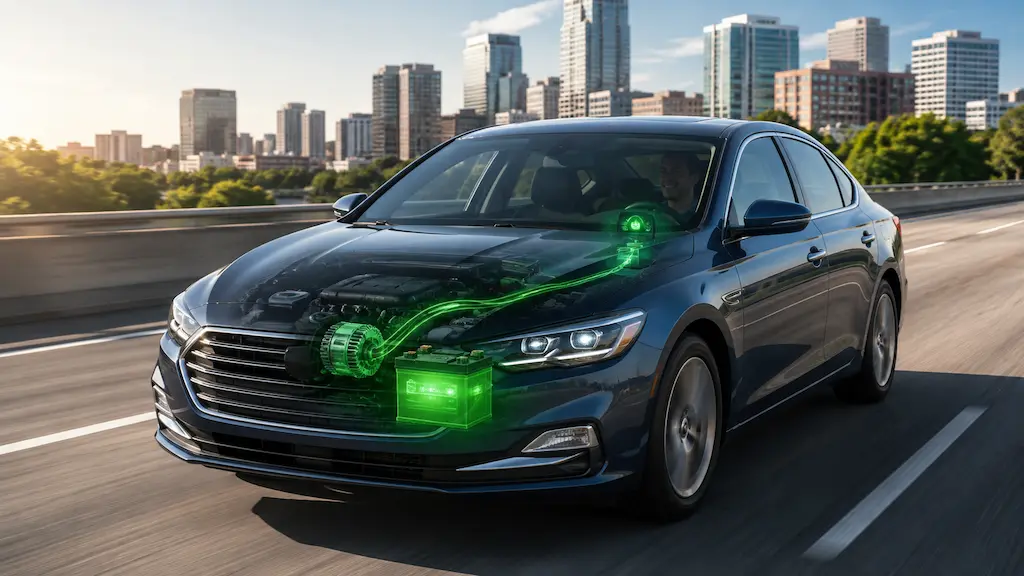
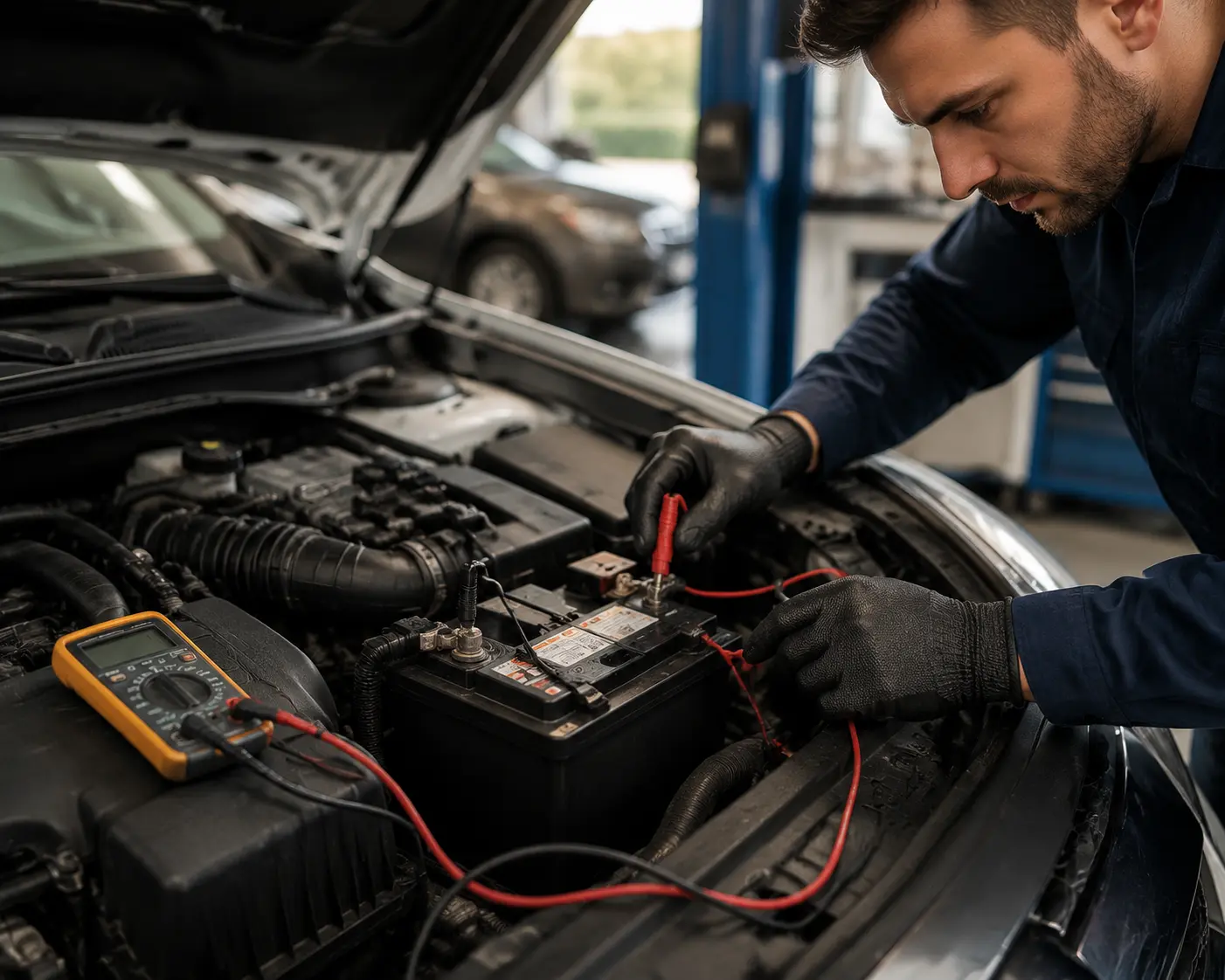
- A 12-volt auxiliary battery that runs the lights, locks, computers, and dashboard the same kind of low-voltage battery a normal car uses.
When your EV “dies,” it’s often the 12V battery that needs attention, not the main one.
Trying to jump the high-voltage battery can cause serious damage or even safety risks, so always confirm which one’s the problem before taking action.
For a safe and proper fix, reaching out to a professional Jump Start Service in Dubai is the most reliable way to get back on the road quickly.
2. Check the Owner’s Manual
Every EV is built differently. Tesla, Nissan Leaf, Hyundai Ioniq, and other brands each have their own jump-start instructions and their own location for the 12V jump points. Your manual will tell you whether your EV’s 12V battery can be jumped, exactly which terminals or posts to use, and the safety steps specific to your model.
Your owner’s manual will tell you:
- Whether your EV can be jump-started.
- The correct battery terminals to use.
- Safety steps specific to your model.
Important: Skipping this step could lead to costly damage or void your warranty, so take a minute to read before you react.
3. Use an EV-Safe Jump Starter
- Never use a traditional car battery or another EV to jump your vehicle.
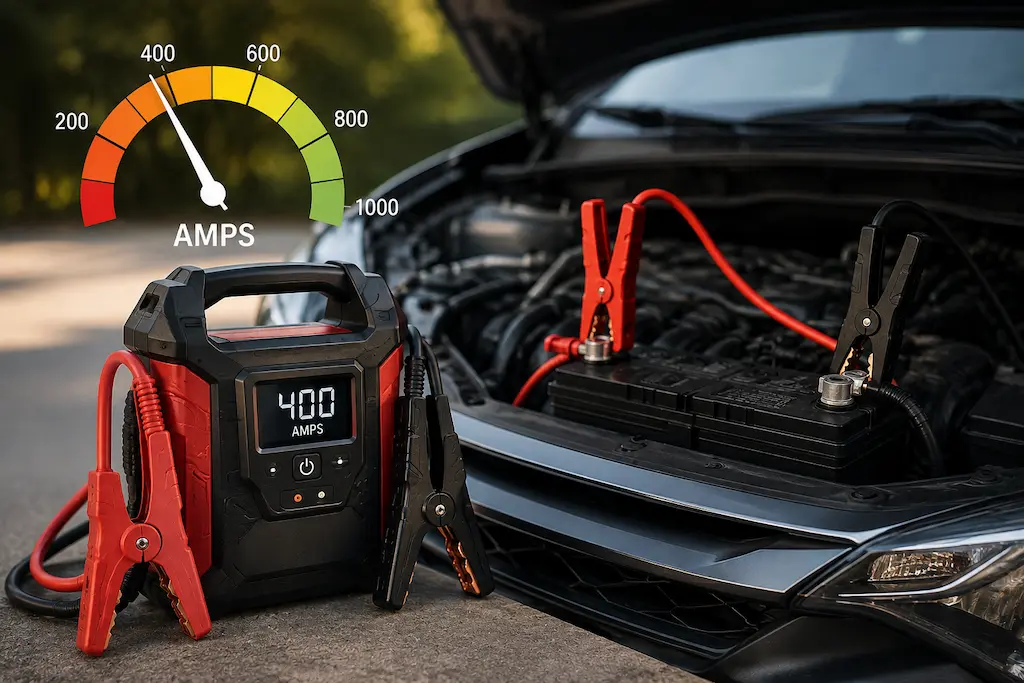
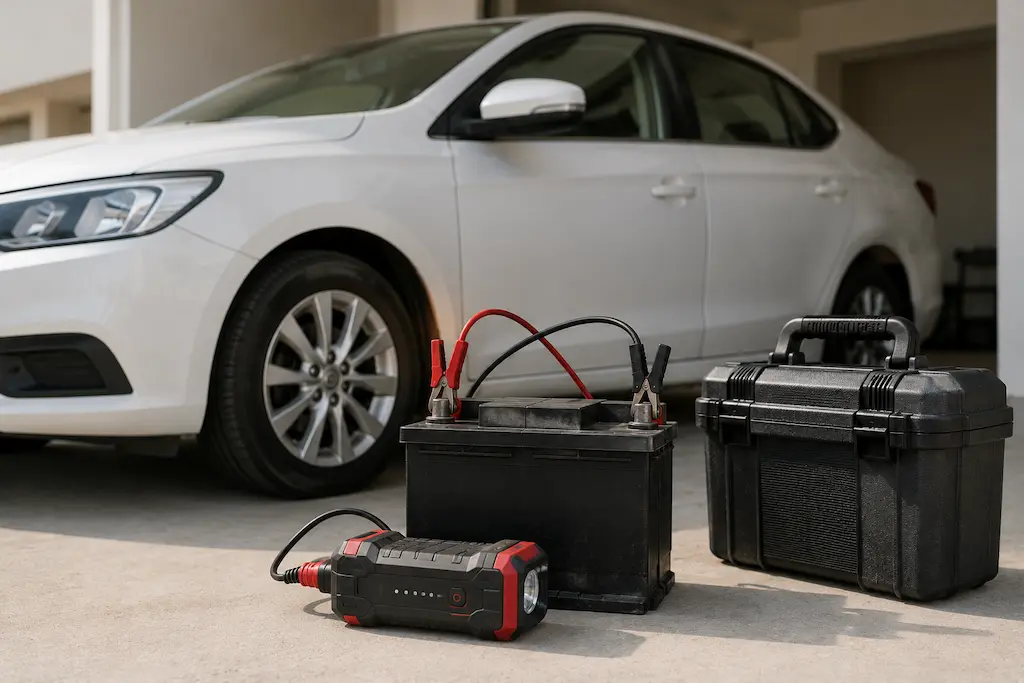
- Instead, invest in an EV-compatible portable jump starter designed for 12V systems.
- These devices deliver controlled voltage that won’t overload your EV’s sensitive circuits.
Tip: Choose a lithium-ion jump starter with surge protection; it’s compact, safe, and ideal for emergencies.
4. When to Call for Professional Help
- If you’re uncertain or not confident doing it yourself, it’s smarter (and safer) to call for help.
- Roadside assistance or an EV-certified technician will have the proper insulated tools and grounding gear to do the job safely.
- It might feel like a small issue, but one wrong connection could cost you thousands in repairs.
5. Prevent Future Battery Issues
A little prevention avoids the whole situation:
- Drive or at least power up your EV regularly so the 12V battery stays topped up long idle periods are a common cause of a flat 12V.
- Don’t leave lights or accessories drawing power when parked.
- Schedule periodic maintenance, especially before long trips and ahead of summer.
- Keep a 12V-safe portable jump starter in the boot.
These small habits save you big headaches later.
Know When Not to Jump-Start Your EV
Sometimes, the smartest move is not to attempt it at all.
Avoid jump-starting your EV if:
- There’s visible battery damage or smoke.
- Warning lights show high-voltage system issues.
- The car has been submerged or exposed to water.
In these cases, don’t take risks; call an expert immediately.
Keep an Emergency EV Kit
Sometimes the right call is not to attempt it at all. Stop and call an expert immediately if there’s any visible battery damage or smoke, if warning lights indicate a high-voltage system fault, or if the car has been submerged or exposed to water. These are not DIY situations, they’re safety hazards.
Common Myths About Jump-Starting EVs
Let’s clear up a few common misunderstandings:
- You can jump an EV like a regular car. Wrong!
- Any battery booster will work. Not true!
- Most EVs only need their 12V battery boosted, not the main pack.
Knowing the difference keeps you safe and protects your EV.
Final Thoughts
Jump-starting an electric vehicle isn’t difficult, but it does demand a little extra care and the right approach.. By understanding your EV’s battery system, using safe tools, and following the correct steps, you can handle small issues confidently, without causing damage.
And remember: when in doubt, let the professionals take charge. If you ever need guidance on how to jump start a car, these 5 smart tips will help keep your EV reliable, safe, and always ready for your next adventure.
Frequently Asked Question
Can you jump-start an electric car?
You can revive the small 12-volt auxiliary battery that runs an EV’s locks, lights, and screen that’s almost always what’s flat when an EV won’t power on. You never jump-start the high-voltage drive battery. Use a standard 12V source at the manufacturer’s designated jump points, and always confirm the procedure in your owner’s manual first.
Which battery dies when an EV won’t start?
Nearly always the 12-volt auxiliary battery, not the high-voltage pack that powers the motor. Symptoms like a black touchscreen, doors that won’t unlock, or an unresponsive app all point to a flat 12V. Knowing this matters, because the high-voltage battery is sealed, dangerous, and never something you jump-start yourself.
Can you use a normal car to jump-start an EV?
For the 12V battery, yes most manufacturers, including Tesla, permit a standard 12V source such as a portable jump starter or another vehicle at the designated jump points. The key rule is the reverse: you must never use the EV itself to jump-start another car, as that can damage its systems.
Is it safe to jump-start an EV yourself?
It can be, if you only ever connect to the 12V jump points your manual specifies and stay clear of the high-voltage (usually orange) cabling. The risks come from wrong connections or touching the high-voltage system. If you’re unsure, or warning lights show a high-voltage fault, call an EV-certified professional instead.
Where is the 12V battery on an EV?
It varies by model. On a Tesla Model 3 or Y it’s accessed via the front trunk; on Model S and X it’s in the rear. Other EVs differ, and many route dedicated jump posts under a maintenance panel. Your owner’s manual shows the exact location and the correct terminals to use.
What do I need to jump-start an EV’s 12V battery?
A regulated 12-volt portable jump starter is the safest tool, ideally a lithium-ion unit with surge protection. Insulated gloves and your owner’s manual help too. Avoid unregulated high-output devices, and follow the voltage guidance in your manual, since an EV’s 12V system is more sensitive than a standard car’s.