

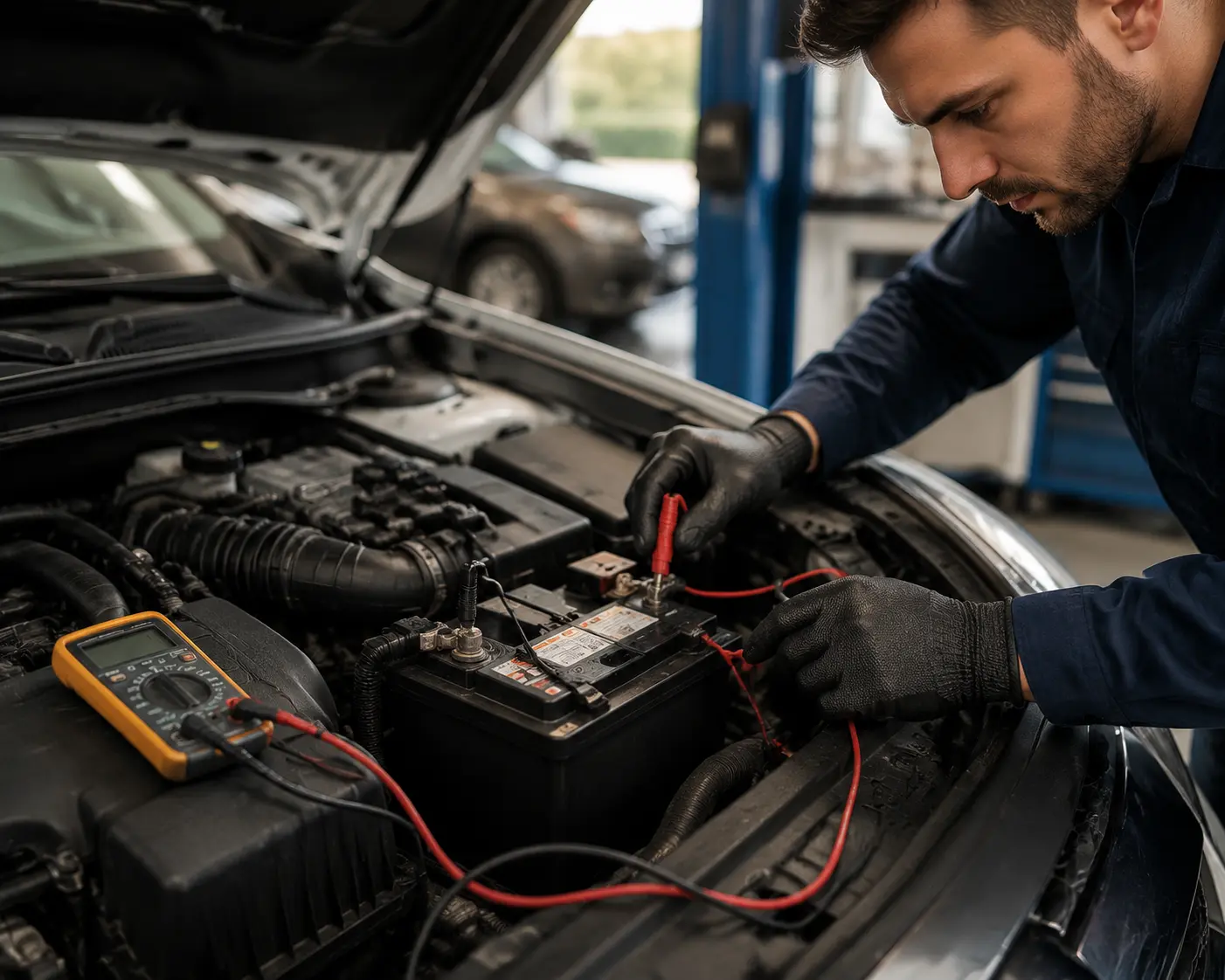


Short Answer: Slow crank, clicking start, dim or flickering lights, or a battery warning light all point to a weak or dead battery. Test the voltage or get a professional check to confirm.
Here’s something I’ve learned from years of dead-battery callouts: the car almost always gives a warning first. By the time someone’s standing in a car park with a key that won’t turn the engine, the signs had usually been there for a week the crank a little slower each morning, the headlights a shade dimmer at night, a flicker on the dash that got waved off as nothing. Battery failure is rarely the bolt from the blue people think it is. It’s a slow fade, and that’s actually good news: it means you can catch it early, if you know what you’re listening and looking for.
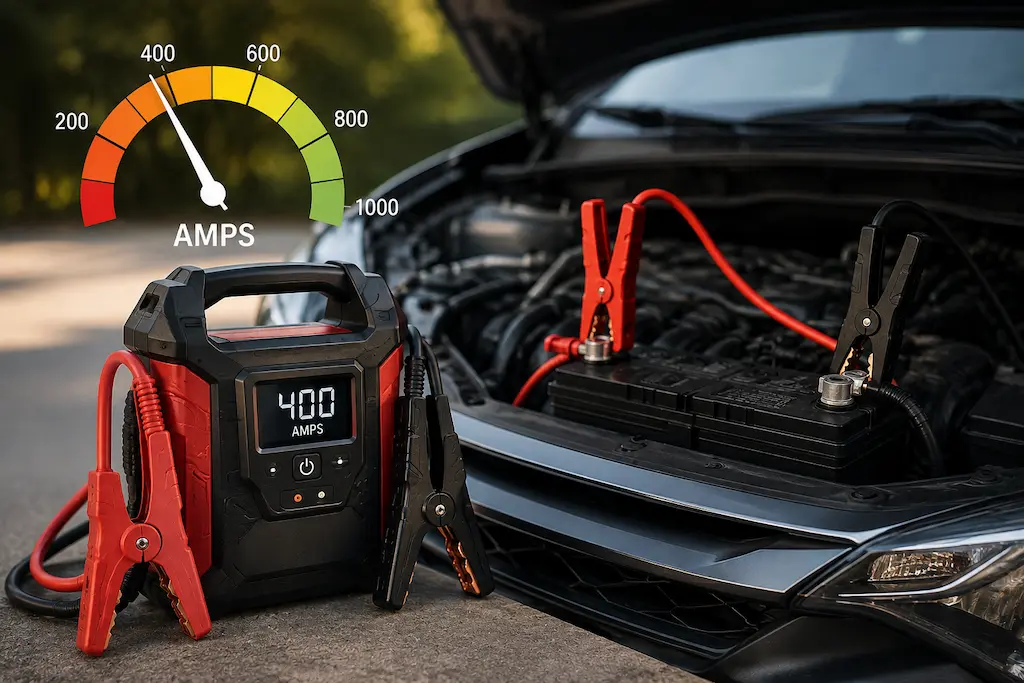
That’s exactly what this guide covers: the clear signs your battery is on its way out, how to tell a genuinely dead battery from a charging-system fault, and a simple voltage test you can do yourself before you spend a dirham on parts. And if yours has already gone, a car jump start will get you moving while you sort the real fix.
1.Clear Signs Your Car Battery Is Dead
Slow Engine Crank
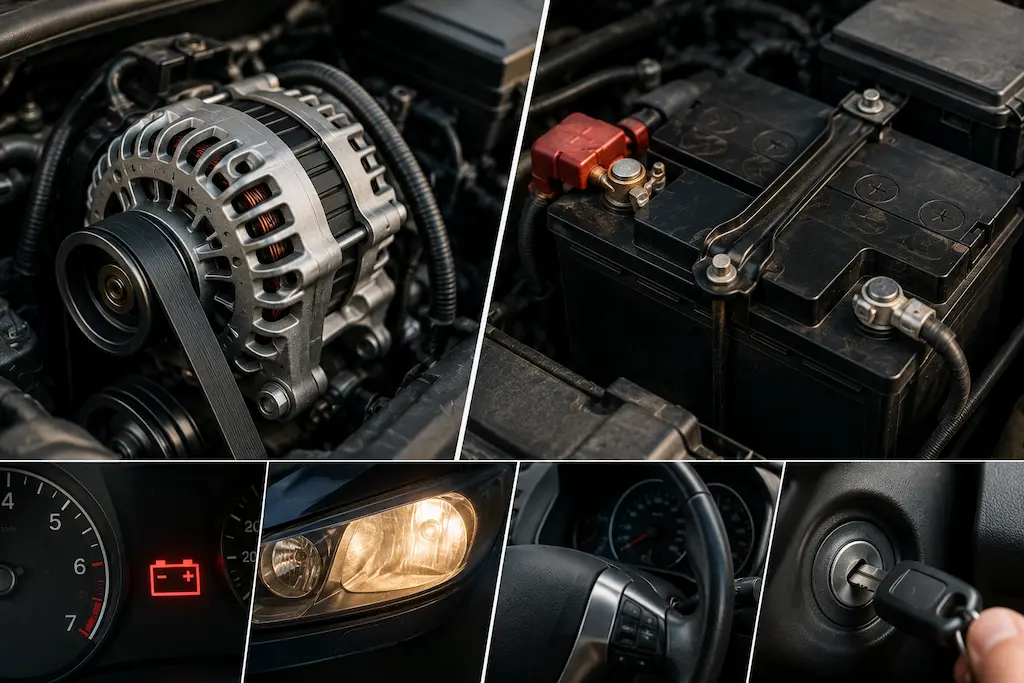
If your engine struggles with a slow sound, your battery is losing power. This is often the first warning sign.
Clicking Sound When Starting
A rapid clicking noise means the battery doesn’t have enough charge to engage the starter motor.
Dim or Flickering Lights
Weak headlights or dashboard lights usually indicate low voltage.
No Power at All
No lights. No crank. No dashboard display. This typically means the battery is fully dead.
2.Dead Battery or Bad Alternator?
Many drivers misdiagnose this.
Here’s a simple way to tell:
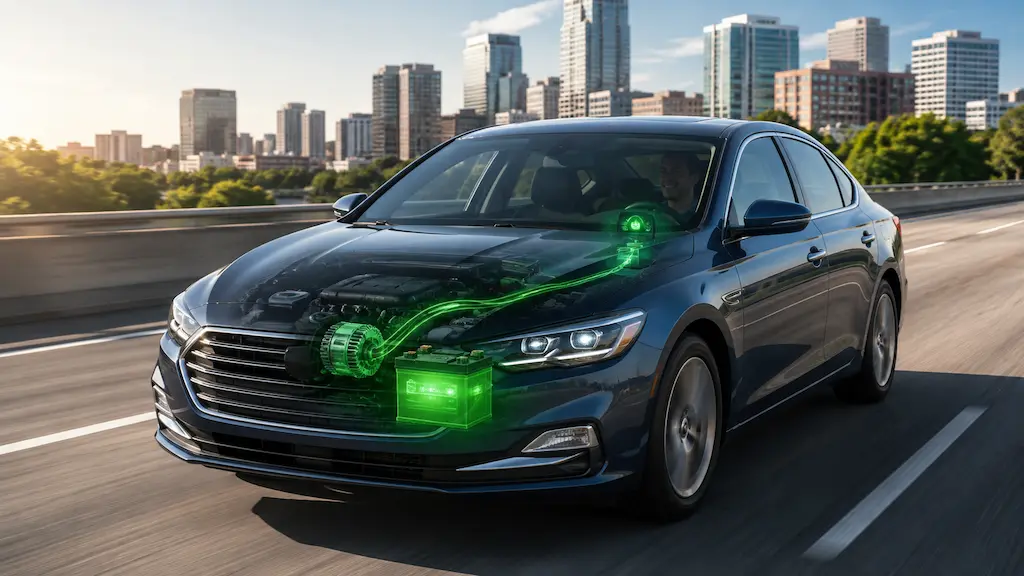
- If your car starts after a jump-start and runs fine, the battery was likely drained.
- If it dies again shortly after, Possible alternator problem.
- If the dashboard battery light stays on while driving, Charging system issue.
Voltage Guide
Using a multimeter:
- 12.6V or higher = Healthy
- 12.4V = Slightly weak
- Below 12.0V = Replace soon
- Below 11.8V = Likely dead battery
This is one of the most reliable ways to confirm car battery failure signs.
3.Why Car Batteries Die
Understanding causes helps prevent future issues.
Natural Causes
- Age (most last 3 to 5 years)
- Extreme heat or cold
- Frequent short trips
Preventable Causes
- Leaving lights on
- Corroded terminals
- Loose battery connections
- Parasitic electrical drain
Hot climates accelerate internal chemical breakdown. Cold weather reduces cranking power. That’s why batteries often fail during seasonal changes.
4.Quick At-Home Battery Check (Safe & Simple)
Before replacing anything, try this checklist:
- Inspect for corrosion or swelling.
- Turn the headlights on, then try starting the car.
- If the lights dim heavily, Weak battery.
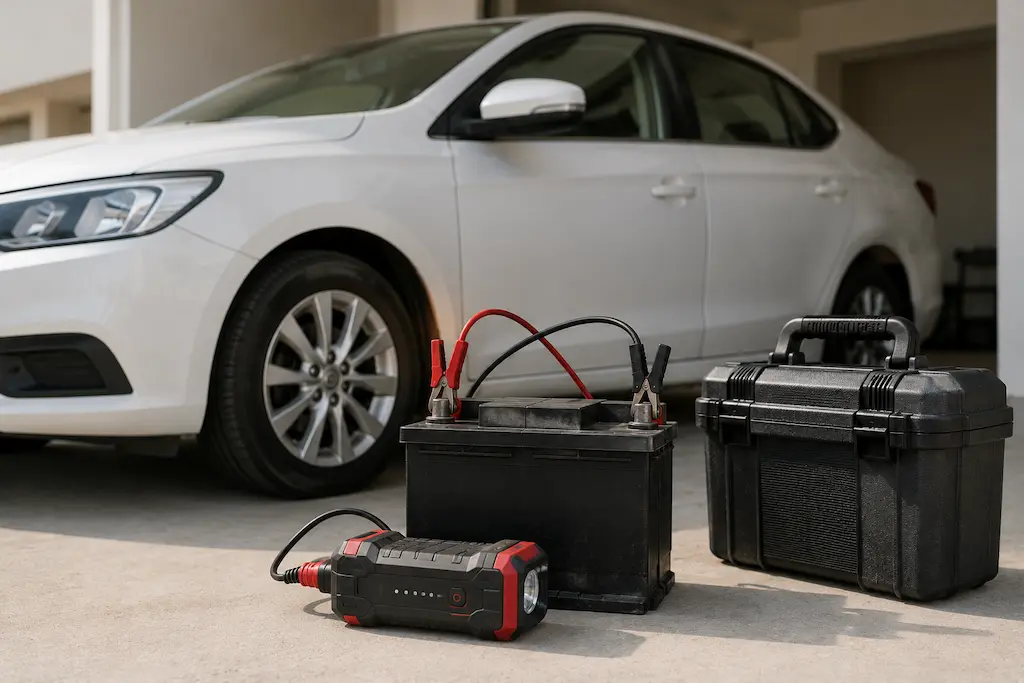
- Try jump-starting:
- If it keeps running after 20 minutes of driving, Drained.
- If it dies again, Battery likely dead.
For modern push-button vehicles, slow system boot-up or multiple warning lights can also signal battery weakness.
When to Replace Your Car Battery
Replace your battery if:
- It tests below 12 volts repeatedly.
- You’ve needed multiple jump-starts.
- It’s older than 4 years.
- You notice a sulfur or rotten egg smell.
Professional load testing gives a more accurate picture of your battery’s performance than voltage testing alone. If you’re unsure, a certified technician can check both the battery and the charging system, saving you from replacing parts you don’t actually need.
How to Prevent Battery Failure
Small habits make a big difference:
- Drive at least 20 minutes regularly.
- Clean terminals every few months.
- Turn off electronics before exiting.
- Test voltage twice a year.
- Park in a garage during extreme temperatures.
Preventive maintenance extends battery life and avoids surprise breakdowns.
Final Thoughts
Knowing how to know a car battery is dead helps you stay in control. Most batteries fail gradually, not instantly. Watch for slow cranking, dim lights, and electrical issues.
When in doubt, test early rather than wait for complete failure. A healthy battery means reliable starts, safer driving, and fewer stressful mornings, and knowing how to jump-start a car safely can save you when your battery dies unexpectedly. Don’t ignore the warning signs; your car always tells you first.
Get Back on the Road Fast with an Expert Car Jump Start in Dubai
Don’t let a dead battery disrupt your day. Our professional car jump start service in Dubai gets you back on the road safely and efficiently.
- Certified Automotive Experts: Skilled technicians handle all vehicle types, from standard cars to push-button start and luxury models.
- Rapid On-Site Response: Quick service wherever you are, reducing downtime and stress.
- Safe, Advanced Equipment: High-quality jump start tools safeguard your battery and sensitive electronics.
- Comprehensive Diagnostics: Beyond the jump, we check battery health and the charging system to prevent future breakdowns.
Frequently Asked Questions
1.How long does a car battery typically last?
Most car batteries last between 3 and 5 years, depending on usage and climate conditions.
2.Can I jump-start my car safely at home?
Yes, using proper safety steps and equipment lets you jump-start a car without damaging the battery or electronics.
3.How can I tell if my car battery is dead?
Slow cranking, clicking sounds, dim/flickering lights, or dashboard battery warning usually indicate a dead or weak battery.