
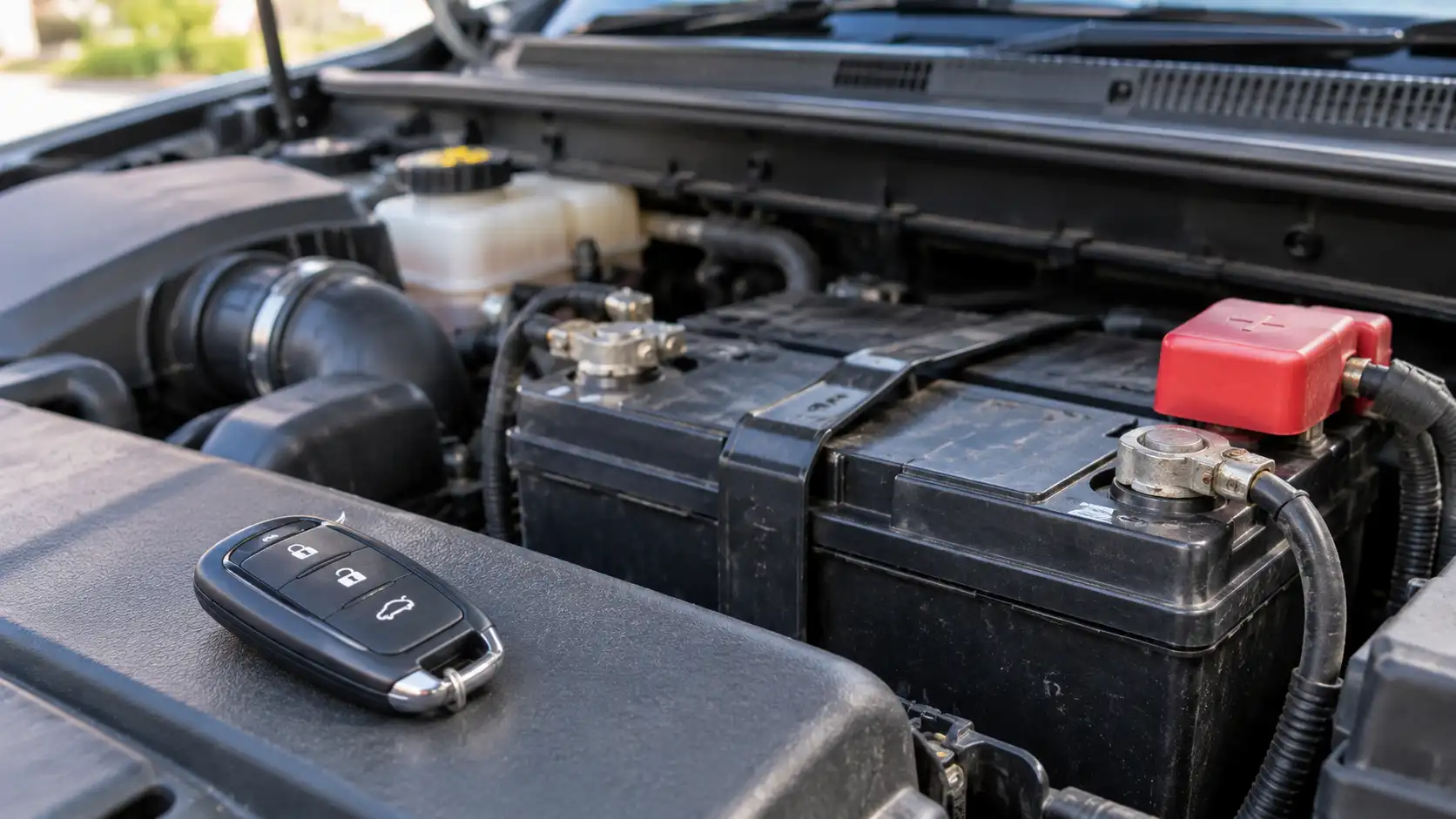
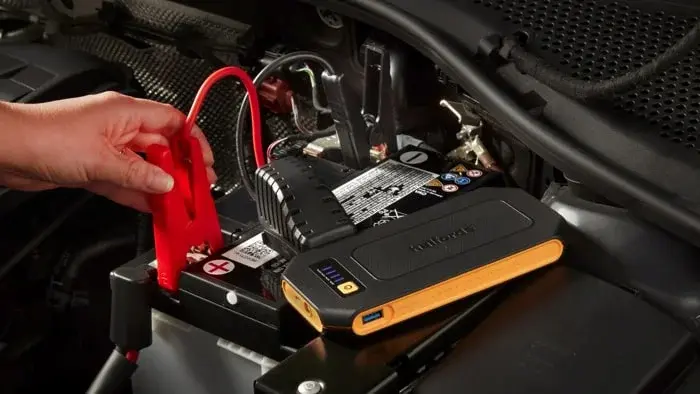
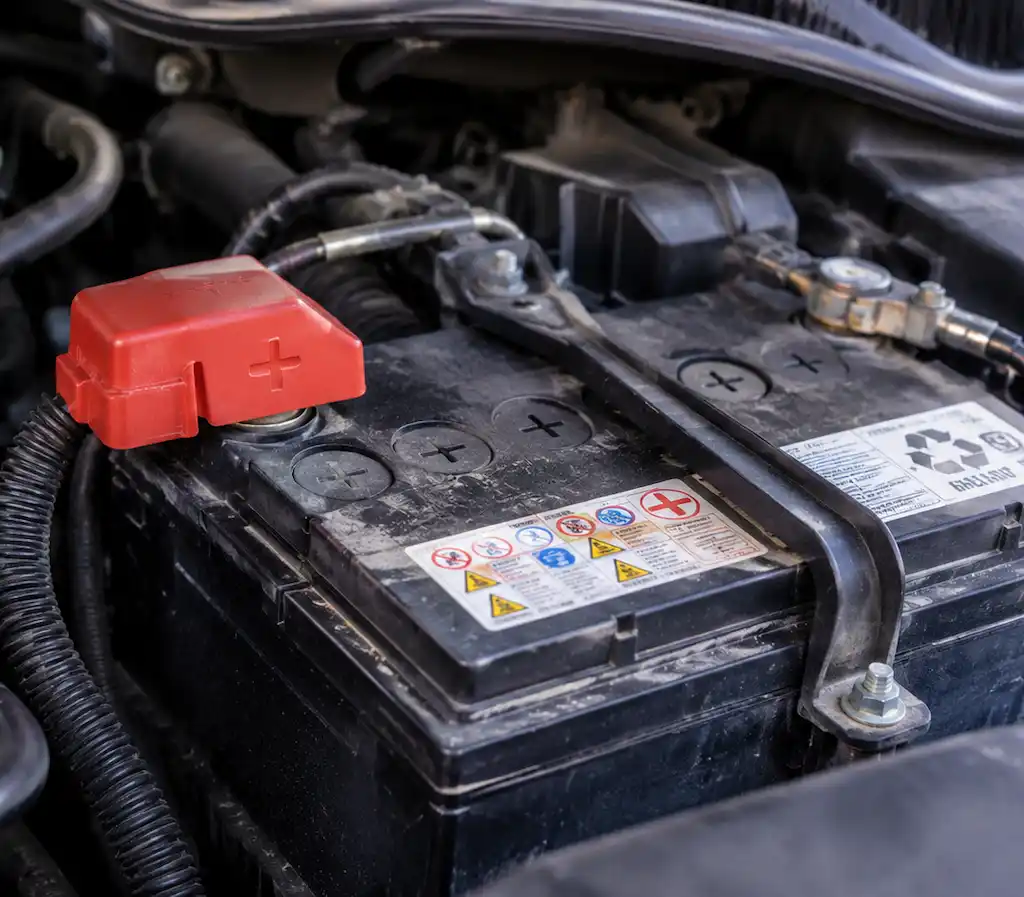


A driver noticed that his battery only went flat when the car was parked beside the front door of his house. At work, the same vehicle could sit for days without trouble. After one more no-start required a jump start service, testing revealed that the key was stored on a hook just a few meters from the parked car. The passive-entry system was communicating more frequently than expected. Moving the key farther away and repairing a faulty door-handle sensor ended the repeated discharge.
Keyless entry is designed to make the vehicle respond before the driver physically presses a button. To do that, parts of the system must remain available while the car is parked.
Normally, standby consumption is tightly controlled. Problems arise when repeated communication or a faulty sensor prevents the system from settling into its intended low-power state.
How Passive Keyless Entry Works
A passive-entry vehicle can detect an authorized key near the car.
Low-frequency antennas and receivers help determine whether the key is close enough to unlock or permit starting.
The system does not keep every module fully awake all night. Instead, it uses controlled standby behavior and wakes additional systems when appropriate.
Why Key Proximity Can Matter
If the key is stored very close to the vehicle, some systems may communicate more often.
The effect varies by manufacturer and generation, so key proximity should not automatically be blamed.
However, moving the key well away from the vehicle during testing is a simple way to eliminate one possible trigger.
Keyless Entry Battery Drain
Keyless entry battery drain can occur when the passive-entry system fails to return to normal standby.
Potential causes include:
- Faulty door-handle sensor
- Stuck request switch
- Water intrusion
- Damaged antenna wiring
- Repeated key detection
- Module software fault
- Network communication problems
- The battery can discharge slowly even though the doors lock and unlock normally.
Why the Problem May Be Missed
A passive-entry fault can be easy to overlook because there may be no warning message and no obvious light left on. The car can appear completely secure while a receiver or handle repeatedly wakes part of the network.
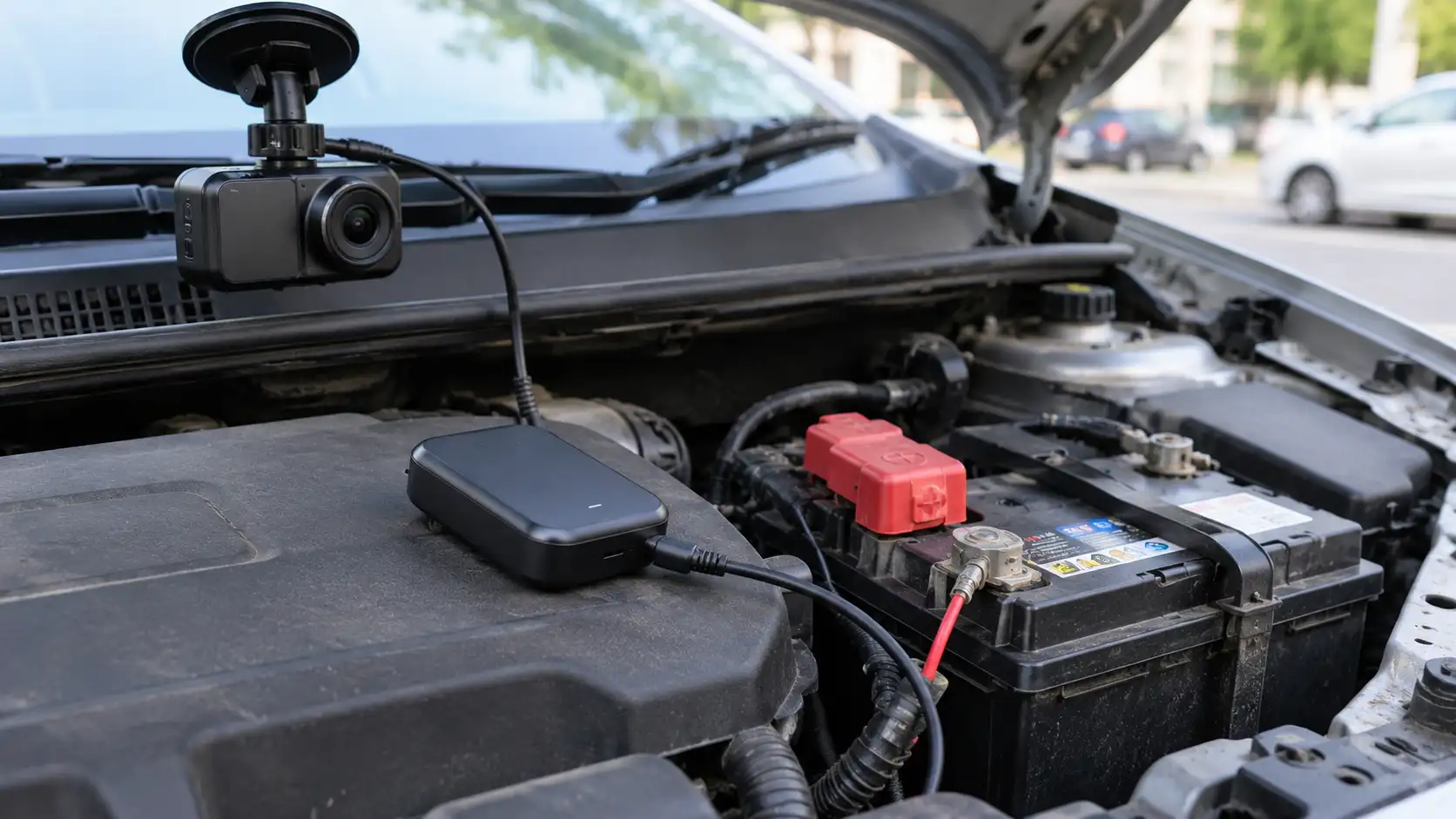
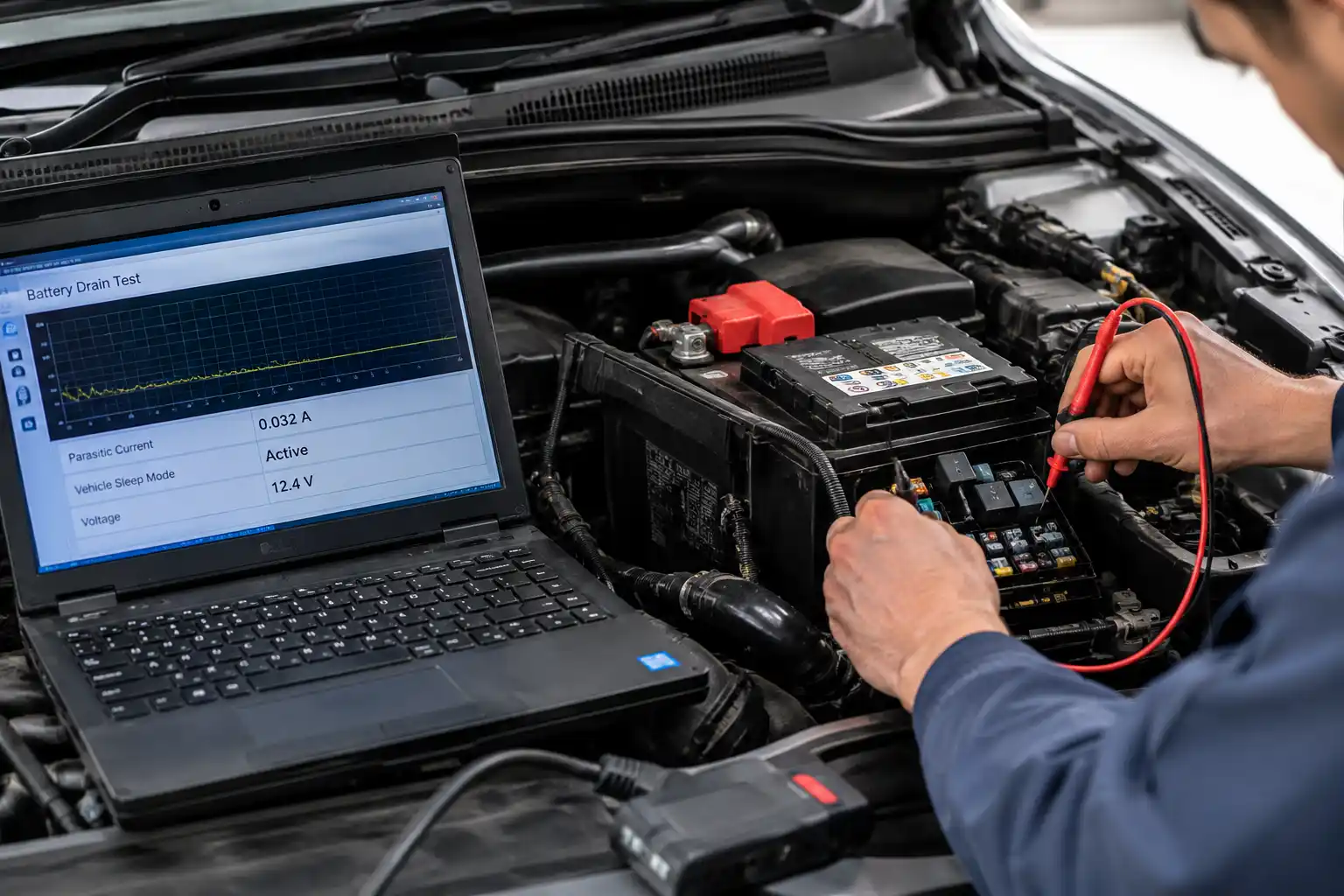
This is why a current logger can be useful. If the draw rises whenever the key approaches or one handle is touched, the pattern provides stronger evidence than replacing the battery and waiting to see whether the problem returns.
How This Fits a Vehicle Battery Drain Guide
A vehicle battery drain guide should include keyless systems because they are intentionally active after parking.
Unlike an interior light left on, the problem may be invisible.
A technician may need to monitor total current while changing key location, disconnecting handle circuits or observing network wake-up events.
BMW Comfort Access Example
A BMW jump start after an overnight discharge can lead to investigation of Comfort Access components on models equipped with passive entry.
Door handles, antennas and related modules can create repeated wake-ups if they send implausible requests.
Battery replacement alone will not solve a network that remains active because of a faulty access component.
Why the Key Battery Is Different
A weak battery inside the key fob can reduce remote performance, but it is not the same as the vehicle’s 12V battery drain.
The vehicle battery powers the receivers and control modules that listen for the key.
Replacing the coin cell in the key may improve key operation but will not repair a faulty vehicle-side sensor.
How to Test the System
A useful test may include:
- Measure sleep current with the key far away
- Repeat the test with the key stored in its normal location
- Check door-handle request data
- Scan for passive-entry faults
- Inspect handles and antennas for water or damage
- Monitor network wake-up events
If current changes significantly with key location, the passive-entry system deserves closer attention.
Security and Relay-Attack Prevention Devices
Some owners store keys in signal-blocking pouches for theft prevention.
These can also help determine whether key-to-car communication is influencing sleep behavior.
However, a pouch is not a repair for a defective vehicle component. If a handle or receiver is faulty, the underlying issue should still be diagnosed.
Why the Problem Can Be Intermittent
Temperature, moisture, key position and radio interference can affect passive-entry behavior.
A faulty handle may act normally in the workshop and misbehave overnight after rain or humidity.
Extended current logging can capture these intermittent wake-ups.
Frequently Asked Questions
1. Can keeping the key near the car drain the battery?
On some vehicles it can contribute to repeated communication, especially if another passive-entry fault is present.
2. Can a faulty door handle cause parasitic drain?
Yes. Passive-entry handles contain switches or sensors that can trigger unwanted network activity.
3. Will replacing the key-fob battery fix vehicle battery drain?
Usually not. The key-fob battery and the car’s 12V battery serve different functions.
4. Can a Faraday pouch help with diagnosis?
It can help eliminate key communication as a variable, but it does not replace proper testing of the vehicle system.