
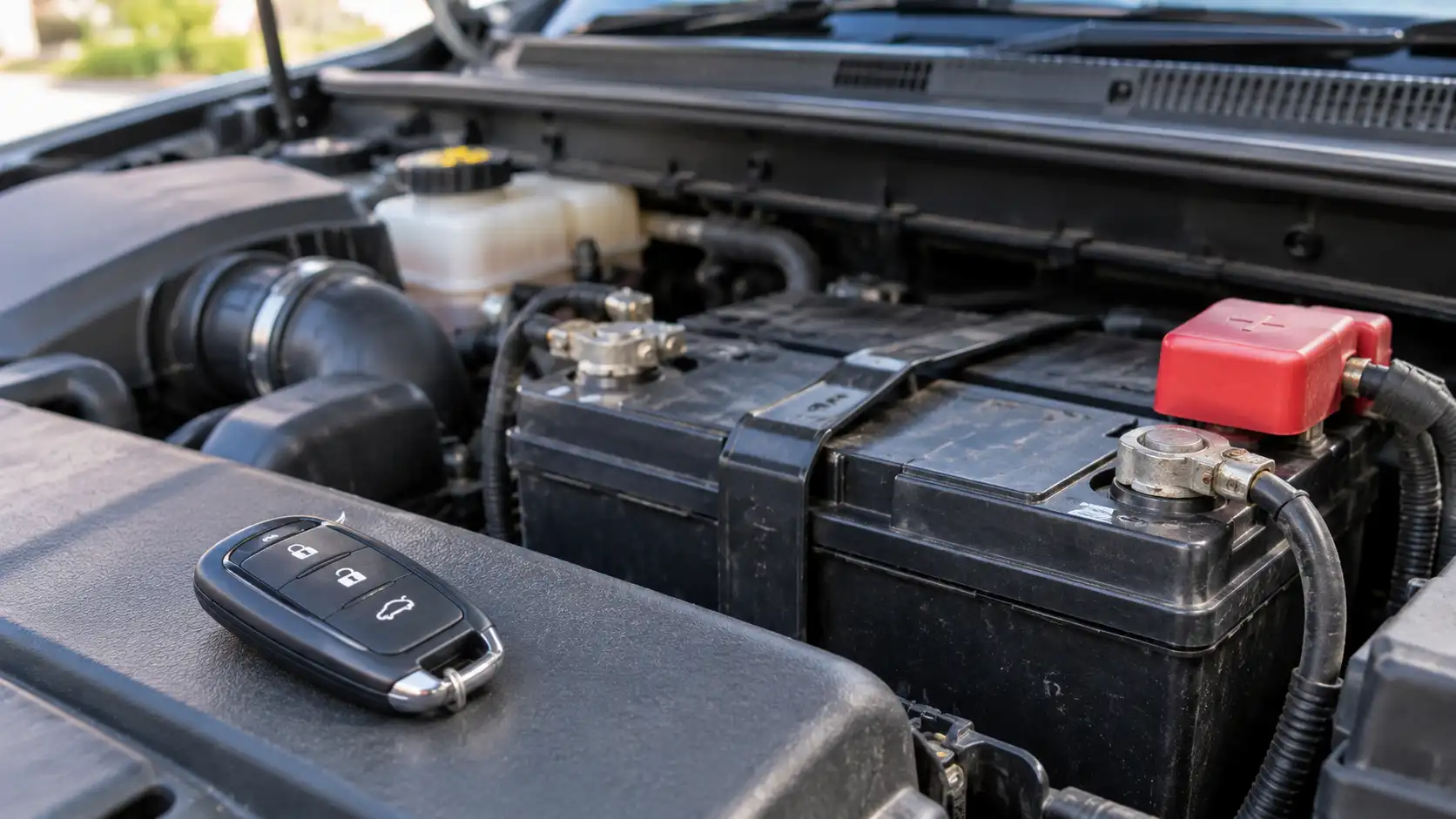
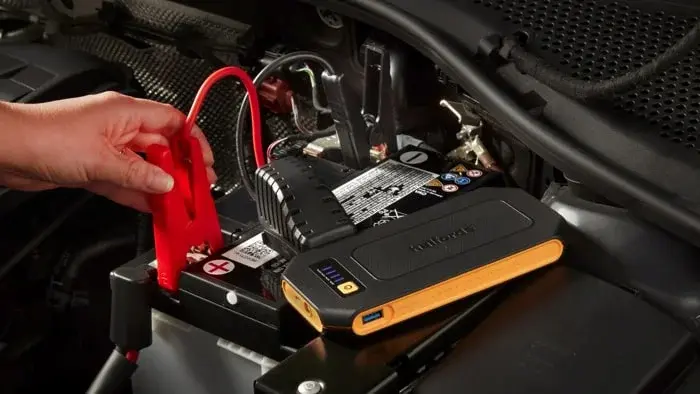
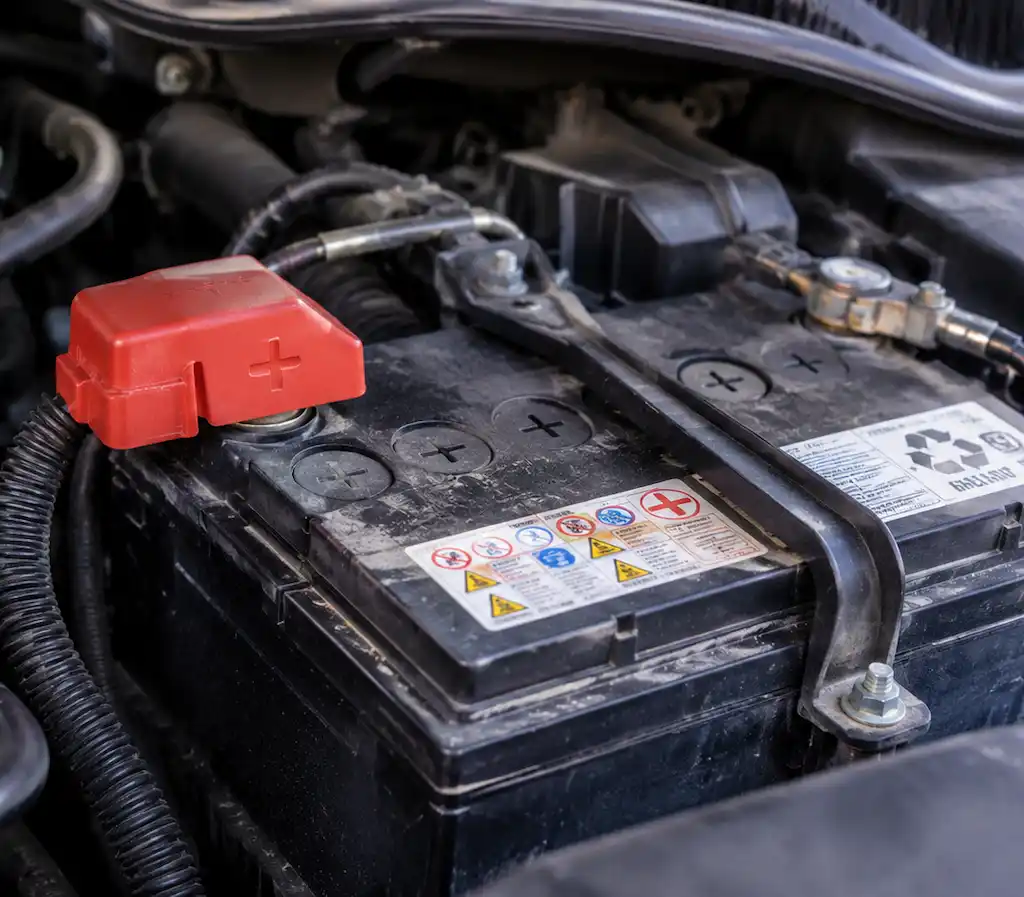
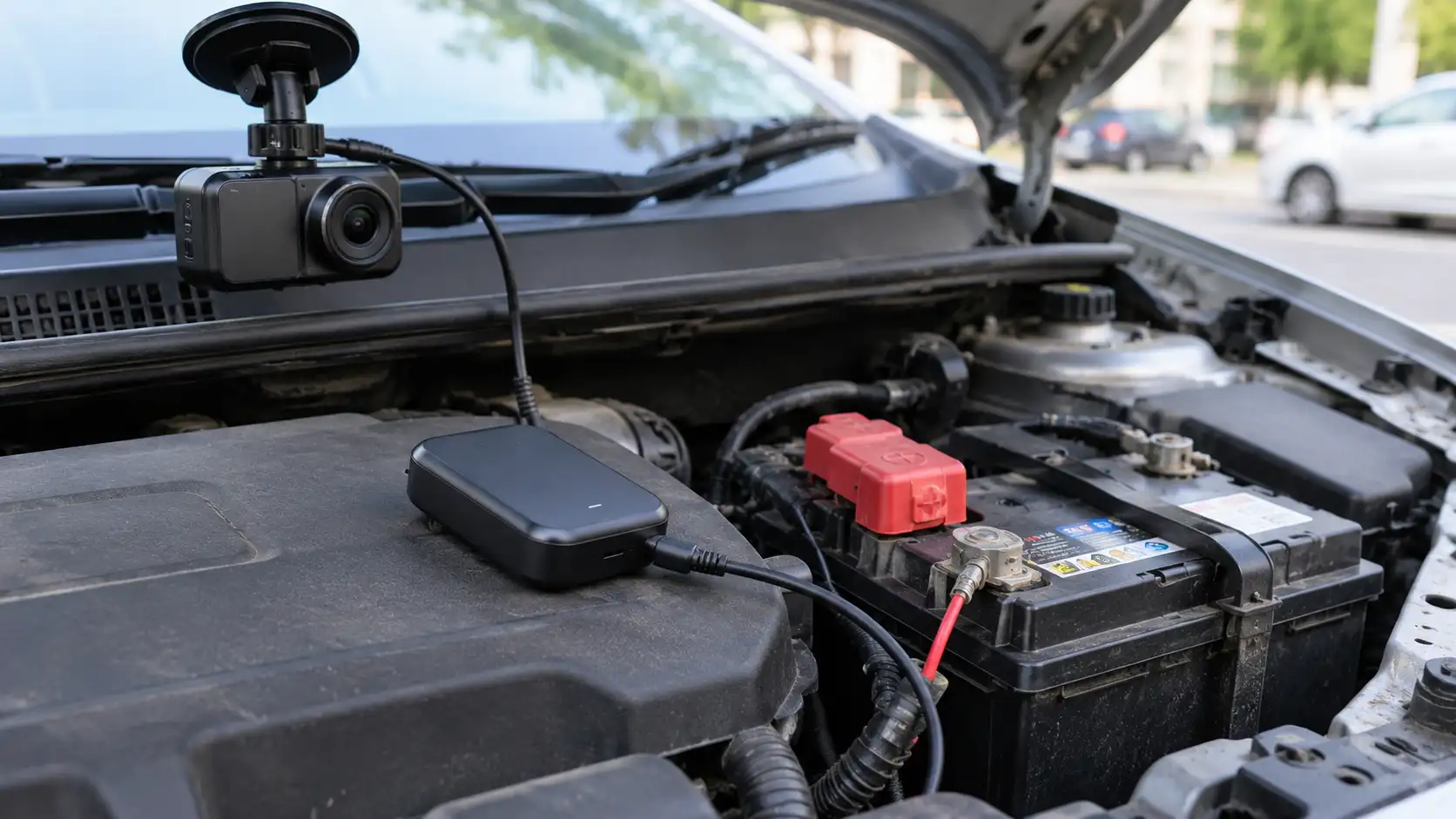
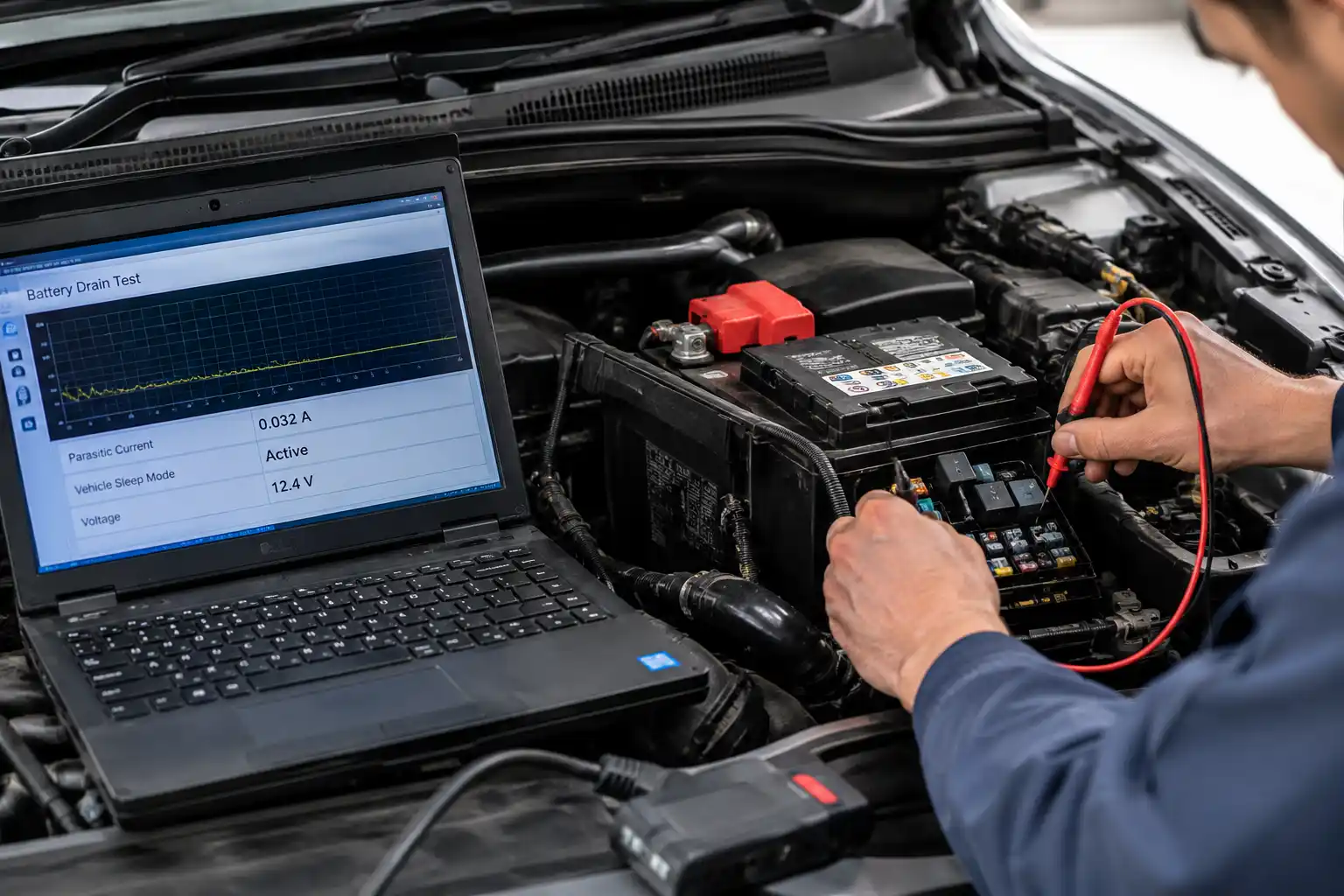


A car owner locked his vehicle, looked through the window and saw every light switch off. He assumed the electrical system was inactive. The next morning, the battery was too weak to start and a jump start service was needed. Testing later showed that one control module continued communicating on the vehicle network for hours after the doors were locked. The cabin looked completely shut down, but the electronics never reached true sleep mode. Repairing the faulty module restored normal overnight current draw.
Locking a modern vehicle does not mean every electronic system switches off immediately. Control modules often stay awake while they finish data storage, security checks, telematics communication and network shutdown.
That delay is normal. The fault occurs when one or more modules repeatedly wake the network or never allow the shutdown sequence to finish.
What Vehicle Sleep Mode Means
Sleep mode is the low-power state reached after active systems complete their shutdown tasks.
During sleep, many modules reduce current consumption dramatically while essential functions such as the alarm or keyless receiver continue operating at a controlled standby level.
The vehicle may pass through several stages before reaching this state.
Why Current Remains High After Locking
Immediately after shutdown, modules may still be:
- Saving learned values
- Checking door and alarm status
- Communicating with telematics services
- Closing network sessions
- Monitoring convenience features
- Waiting for delayed accessory timers
- Measuring current during this period can produce a high reading that is completely normal.
Vehicle Sleep Mode Current
Vehicle sleep mode current should be judged only after the model’s expected shutdown time has passed.
The target value varies by manufacturer and equipment level. A heavily connected luxury vehicle may have different normal standby behavior from a simpler car.
Service information is therefore more reliable than a universal current number.
How an Automotive Parasitic Drain Guide Uses Sleep Testing
An automotive parasitic drain guide must distinguish between normal awake current and abnormal sleep current.
If testing begins too soon, a technician can waste time chasing circuits that were simply completing their normal shutdown sequence.
If the vehicle never settles, the next task is to identify which network or module remains active.
BMW Sleep Behavior
A BMW jump start may be necessary after a network wake-up fault drains the battery, but replacing the battery alone will not solve the cause.
BMW vehicles can contain numerous modules linked by communication buses. Comfort access, telematics, entertainment or an aftermarket device can keep part of the network awake.
Sleep testing should therefore be performed without opening doors or repeatedly approaching the car with the key.
What Can Wake a Sleeping Vehicle?
Common triggers include:
- Unlock commands
- Door or trunk opening
- Keyless-entry activity
- Remote-app requests
- Charging-port or alarm events
- Diagnostic-tool communication
- Faulty modules sending repeated network messages
- Even connecting test equipment can affect the condition being measured.
Why Door Latches Matter During Testing
Technicians sometimes need access to the cabin or fuse box while the vehicle believes all doors are closed.
A door latch can be manually closed or simulated according to safe workshop procedure so modules do not stay awake simply because a door is open.
Care is needed because closing a real door after manually latching the mechanism can damage components.
Why a Module May Refuse to Sleep
A control module can stay awake because of software faults, sensor inputs, communication errors or a connected device requesting activity.
The module that appears active may not always be the original cause. Another component can be sending messages that prevent it from shutting down.
Network-level diagnosis is therefore sometimes required.
How Long Should You Wait?
There is no single sleep time for all vehicles.
Some settle quickly; others require considerably longer, especially if they have telematics or delayed convenience functions.
The correct approach is to use manufacturer information and observe the current trend. A normal vehicle should show stepwise reductions as modules shut down.
When Sleep Mode Is the Real Problem
Suspect a sleep-mode issue when:
- Current stays high well beyond expected shutdown time
- Current repeatedly drops and rises
- Network communication continues for hours
- Removing one module allows the rest of the car to sleep
- Battery discharge occurs mainly after long parking periods
- These patterns are more useful than one isolated current reading.
Frequently Asked Questions
1. Does locking the car immediately put it to sleep?
Usually not. Many vehicles require several minutes or longer to finish their shutdown sequence.
2. Can approaching the car with the key wake it?
On some passive-entry systems, yes. Key proximity can trigger communication.
3. Why does the current drop in several steps after locking?
Different modules shut down at different times, so the total current can fall gradually.
4. Can one faulty module keep the whole car awake?
Yes. A module or network fault can prevent other connected systems from entering sleep.