
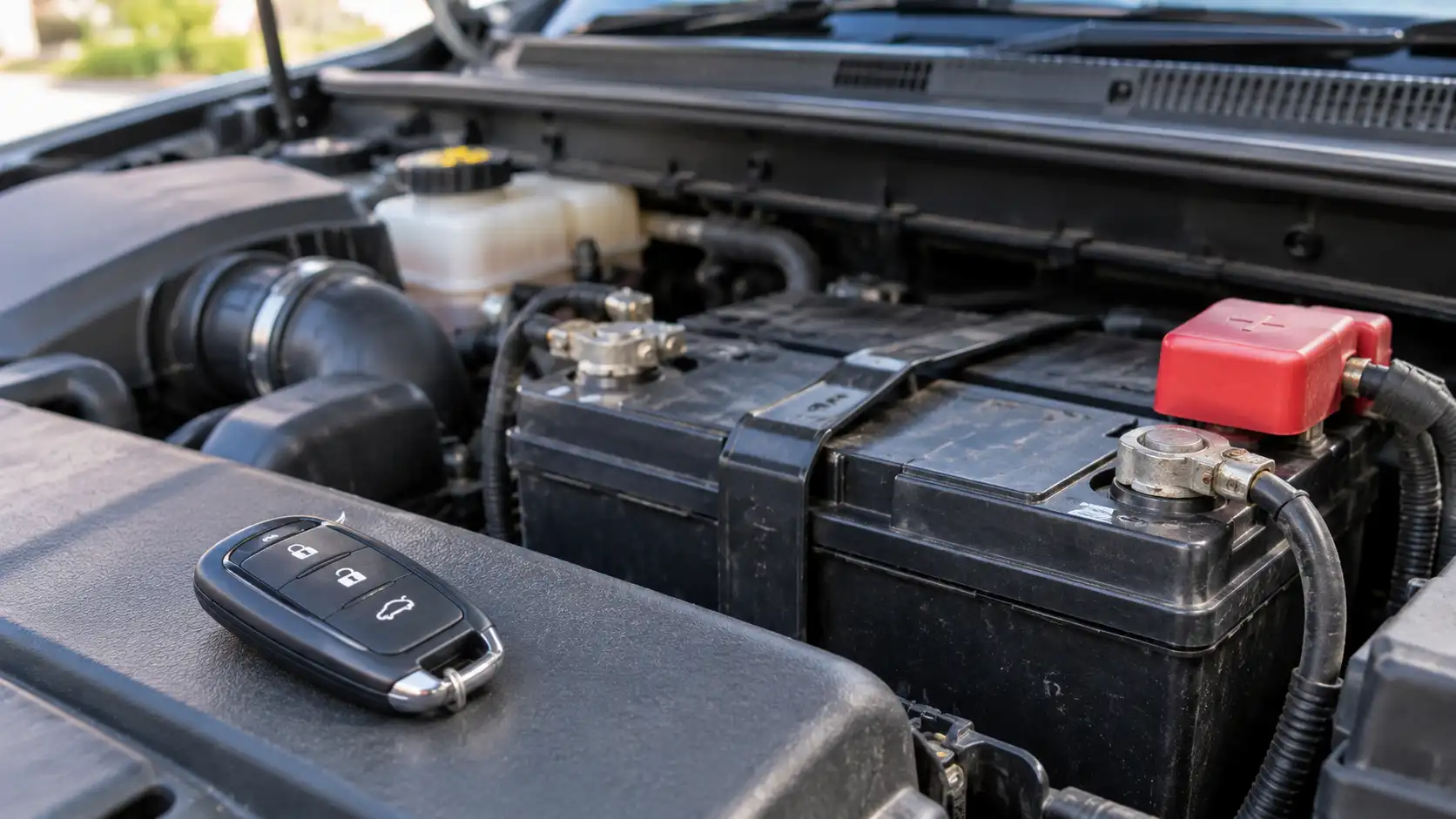
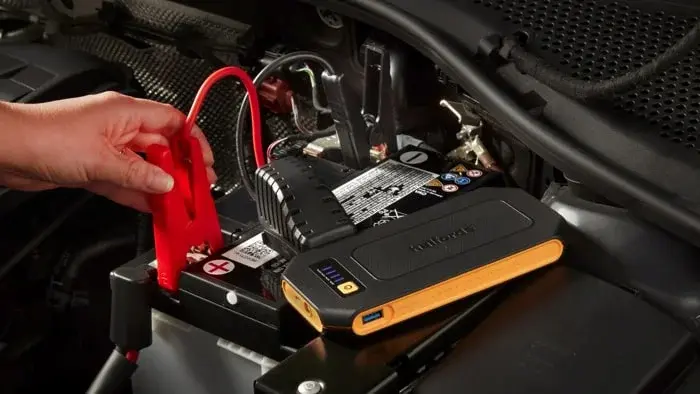
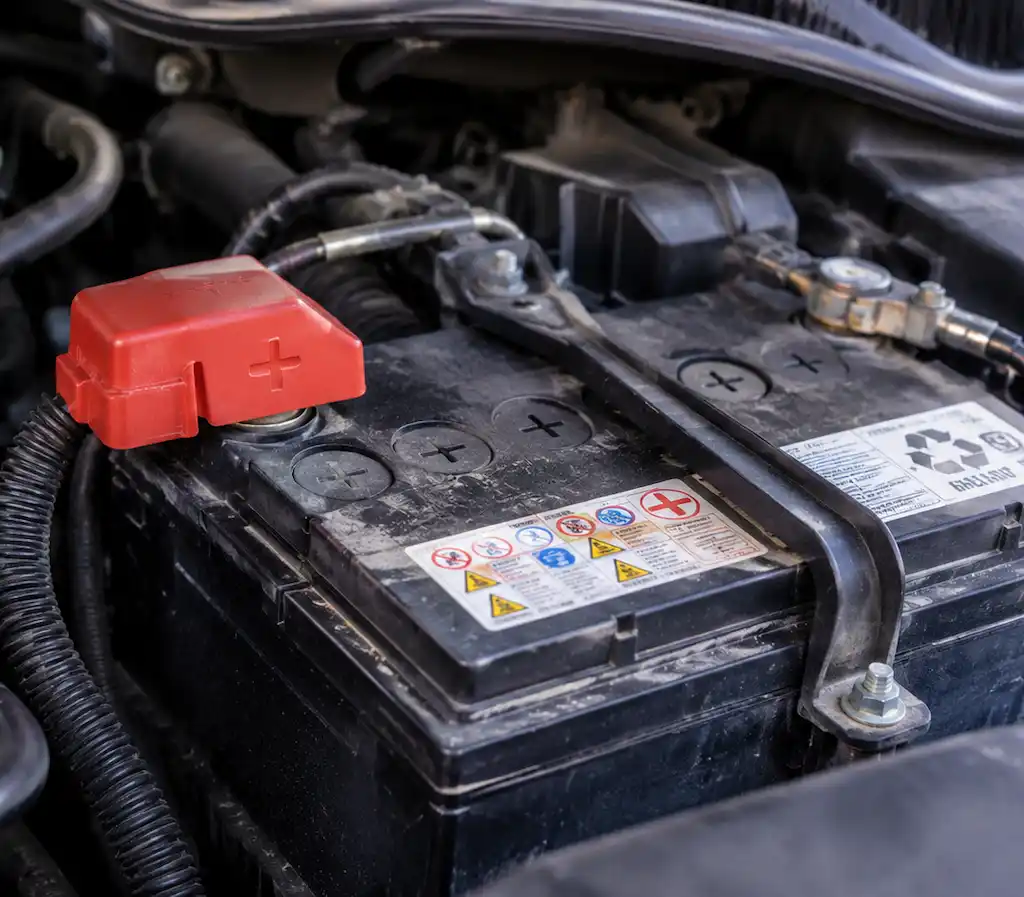
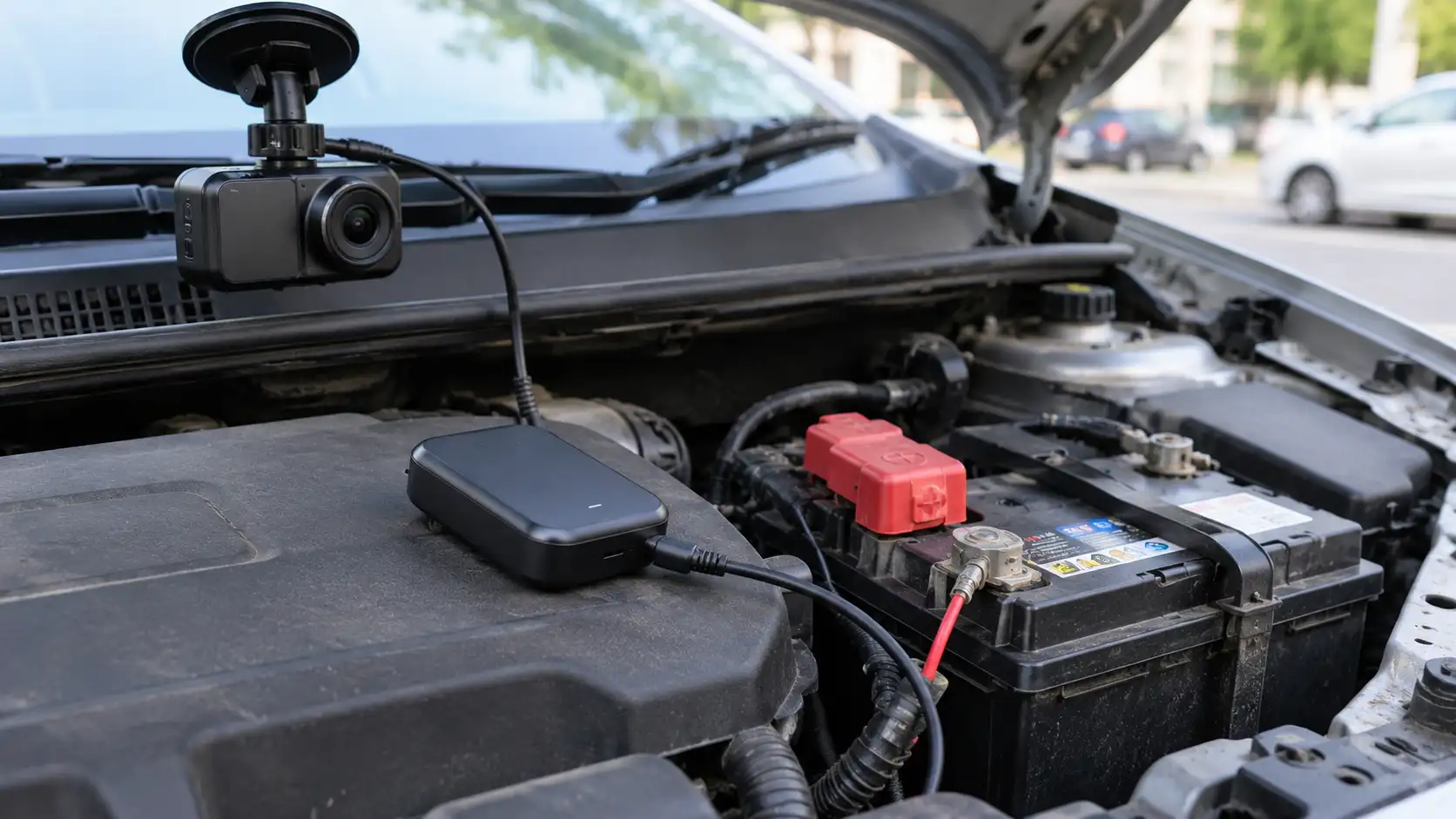
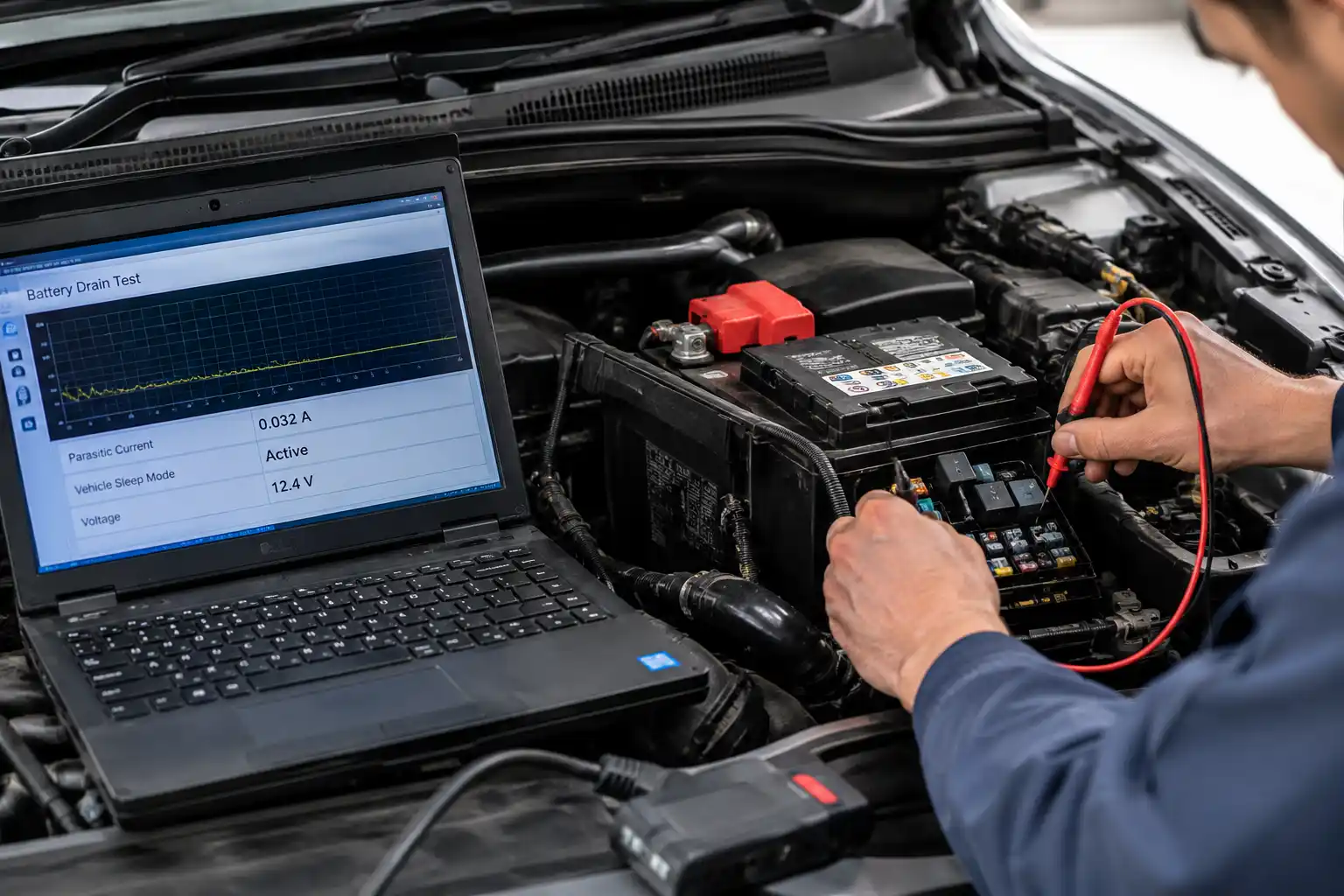


A Dubai driver parked his car on Thursday evening with a healthy battery and returned on Saturday morning to find the dashboard completely dark. A jump start service in Dubai got the engine running, but the battery tested well and the alternator was charging normally. The real problem appeared only after the car was locked and left undisturbed: an aftermarket tracker kept one network awake, preventing several modules from entering their low-power state. Once the tracker wiring was corrected, overnight current draw fell to normal and the repeated no-start problem ended.
Battery drain after parking is often blamed on the battery first, yet a healthy battery can be discharged by a vehicle that never truly goes to sleep. Modern cars remain electrically active for a period after the ignition is switched off. Modules exchange data, security systems arm, telematics finish communication and convenience functions wait for possible commands. Only after these processes finish should most systems enter a low-current sleep state.
What Is a Parasitic Battery Drain?
Parasitic draw is electrical current consumed when the vehicle is switched off and parked. Some draw is normal because alarms, clock memory, keyless receivers and telematics may need standby power.
The problem begins when current remains high enough for long enough to discharge the battery faster than the vehicle’s normal usage pattern can recover it.
A vehicle driven every day may hide a moderate draw because regular charging masks it. Leave the same vehicle parked for several days and the problem can suddenly become obvious.
Dashcams, GPS Trackers and Accessories
Aftermarket electronics are a common source of drain because they are often connected to permanent battery power.
A dashcam with parking mode may intentionally stay active after the vehicle is locked. A GPS tracker may transmit location data on a schedule. An amplifier, charger or accessory module may fail to shut down completely.
This is why dashcam accessory battery drain should be evaluated by measuring sleep current, not by assuming the accessory is harmless because its screen is off.
Good installations use appropriate low-voltage protection, correct fuse selection and wiring that matches the intended operating mode.
Vehicle Sleep Mode
Modern cars rarely enter sleep immediately after locking. Some modules may remain awake for several minutes while they finish tasks and exchange information.
A technician who measures current too early can falsely diagnose a problem.
The question is whether vehicle sleep mode current eventually falls to the expected level for that model.
Opening a door, unlocking the car, moving a key near the vehicle or connecting certain diagnostic equipment can restart the timer and wake multiple modules.
That makes sleep-mode testing a controlled procedure rather than a quick reading.
Diagnosing Drain Without Pulling Every Fuse
The traditional method of pulling fuses one at a time can work, but it has drawbacks. Removing a fuse can wake the network, erase evidence or alter the condition causing the draw.
Modern diagnosis may use voltage-drop measurement across fuse test points, a low-amp current clamp or scan data to identify which circuit remains active without disturbing the vehicle.
The idea behind parasitic drain diagnosis is to preserve the fault while narrowing the current path.
A technician may first confirm abnormal total current, allow the car to sleep, then compare fuse voltage drops or current flow to identify the active branch.
Keyless Entry Systems
Passive keyless entry systems listen for nearby keys. If the key is stored very close to the parked vehicle, communication can occur more often than expected on some systems.
A malfunctioning door-handle sensor or keyless receiver can also keep parts of the network awake.
That is why keyless entry battery drain should be considered when no obvious accessory is present and the drain appears linked to vehicle location or key proximity.
Moving the key farther away during testing can help determine whether the passive-entry system is contributing.
Telematics and Connected Apps
Connected vehicles may communicate with cellular networks, cloud services and smartphone apps after the engine is off.
Remote locking, vehicle status checks, location functions and software communication all depend on telematics hardware.
Normally, the system is designed to manage this activity without excessive battery use. Problems occur when a module repeatedly retries a failed connection, software remains active or an app command wakes the car frequently.
Telematics battery drain can therefore be intermittent and difficult to reproduce in a short workshop test.
BMW and Network Wake-Up Diagnosis
A BMW jump start may restore a vehicle after an overnight discharge, but the next step should be to identify why the battery became low.
Many BMW models use multiple control networks and energy-management logic. A door handle, comfort-access component, telematics module or aftermarket accessory can keep the vehicle awake even when the car appears fully locked.
The battery may be blamed because it is the visible failure point, while the actual fault is a module that never allows the network to enter sleep.
Intermittent Parasitic Drain
Some drains do not occur every night.
A module may wake only after a specific event, temperature change, failed network message or remote-app request. That can make the car behave normally while connected to test equipment.
Intermittent parasitic drain diagnosis often requires extended monitoring. A current logger or clamp meter with recording capability can capture when the draw rises and how long it lasts.
The timing pattern can provide useful clues. A draw that appears every fixed interval may point toward a scheduled communication event, while random wake-ups can suggest a faulty module or network issue.
Why Pulling a Fuse Can Hide the Problem
Removing and reinstalling a fuse can reset the module on that circuit. If the module had been stuck awake because of a software or communication condition, the reset can make the fault disappear temporarily.
That is one reason modern testing increasingly favors non-intrusive measurements before fuse removal.
Once the suspect circuit has been identified, the technician can disconnect individual components in a controlled way.
How Long Should a Car Take to Sleep?
There is no universal number.
Some vehicles settle within minutes, while others take much longer depending on options, telematics activity and manufacturer design.
The correct specification should come from service information for the exact vehicle.
Testing should begin only after the expected shutdown sequence is complete and wake-up actions have been avoided.
Battery Condition Still Matters
Parasitic drain and battery condition can exist together.
A healthy battery may tolerate a small abnormal draw longer than an aged battery. A weakened battery has less reserve capacity and can reveal the problem sooner.
Diagnosis should therefore include battery state of charge, capacity or conductance testing, charging-system verification and parasitic-current measurement.
Replacing an old battery without fixing the drain can lead to another failure. Fixing the drain without checking a damaged battery can also leave the driver with unreliable starting.
A Practical Diagnostic Sequence
- A controlled process usually works better than guessing:
- Fully charge and test the battery
- Confirm alternator performance
- Measure key-off current
- Allow the vehicle to reach true sleep mode
- Avoid opening doors or waking networks
- Record whether current remains above specification
- Use fuse voltage-drop or current-clamp testing to locate the circuit
- Inspect aftermarket electronics and recently installed accessories
- Review telematics and keyless-entry activity
- Monitor for intermittent wake-ups when necessary
- This method keeps the fault intact while narrowing the possible causes.
Frequently Asked Questions
1. Is some battery drain normal when a car is parked?
Yes. Security systems, memory functions and connected modules use a small amount of standby power. The concern is currently above the manufacturer’s expected sleep value.
2. Can a dashcam drain a car battery overnight?
Yes, especially if parking mode is wired to constant power without suitable low-voltage protection or if the camera fails to enter its intended low-power state.
3. Why does my battery die only after two or three days?
A moderate parasitic draw may not discharge the battery in one night but can remove enough energy over several days to prevent starting.
4. Can a new battery still go flat because of parasitic drain?
Yes. A new battery can be discharged if an abnormal electrical load remains active long enough after the vehicle is parked.