
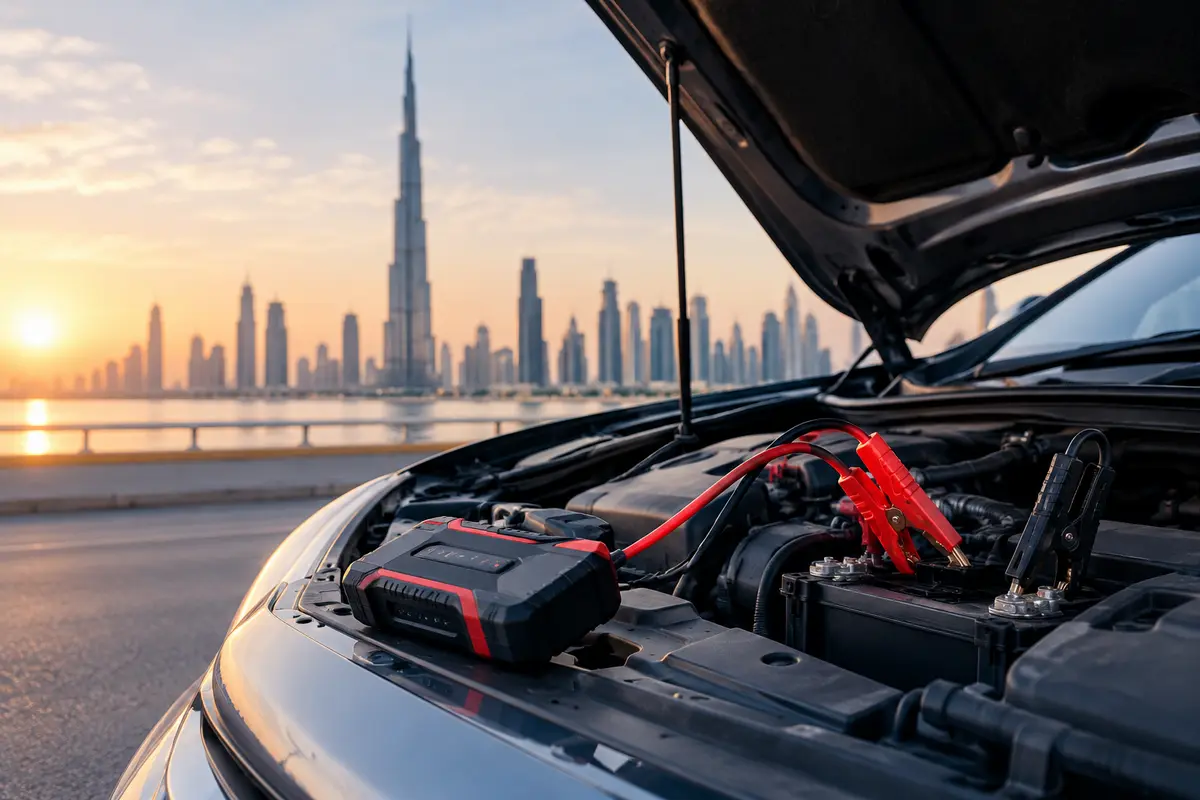

Jump-starting means using another vehicle’s battery, or a portable jump pack, to give a flat battery enough power to start the engine. The idea is simple. The risks are the part people overlook: sparks near the battery, damage to the car’s electronics, burns and injuries.
Doing it in Dubai adds a few of its own. Summer heat stresses batteries, car parks are tight and busy, and roadside shoulders are often right next to fast traffic. That’s why the order of the steps, the right equipment, and knowing when to stop all matter as much as the basic idea.
This guide covers the safety side from start to finish, based on standard practice used by mechanics and roadside professionals. And if you’d rather not do it at all, a jump start service in Dubai is a perfectly reasonable choice, especially in a crowded car park or on a busy road.
What You Need Before You Start
- Jumper cables that are in good condition, with no cracked insulation or exposed wire. For most passenger cars, 4 to 6 gauge works well (a lower number means thicker cable). Larger engines and diesels do better with thicker cables.
- A working car with a healthy battery of the same voltage (12V for almost all cars).
- A flat, safe place to park both vehicles.
- Your owner’s manual, since some cars have dedicated jump terminals or special instructions.
- Gloves and eye protection, if you have them.
Thin or frayed cables can overheat, which matters more when the engine bay and the air around it are already hot.
Check the Battery and Your Surroundings First
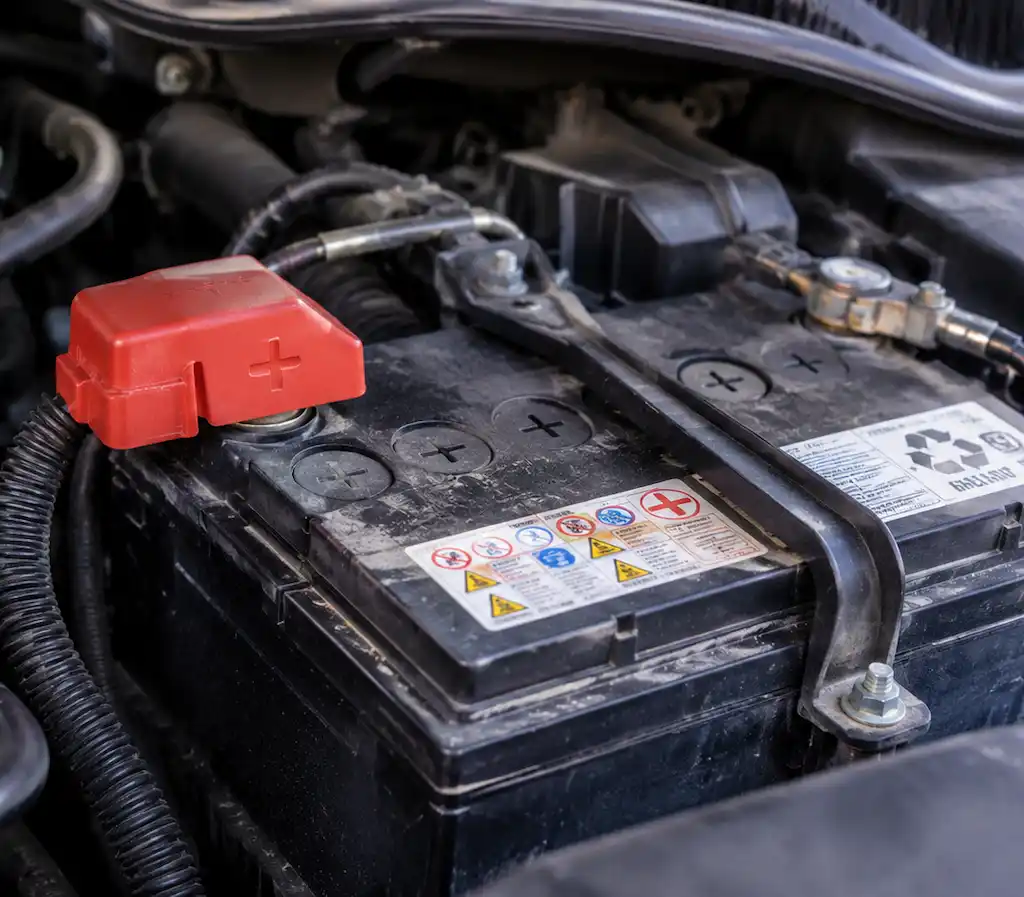
Before you connect anything, look at the dead battery. If the casing is cracked, bulging or leaking, or there’s a strong rotten-egg smell, don’t jump it. A damaged battery is the real danger, since a car battery can explode when hydrogen gas meets a spark. Call a professional instead.
Then look around you:
- Choose a safe spot. A car park or driveway is ideal. On a busy road, only work where you’re well clear of traffic.
- Keep flames and cigarettes away, and keep children and pets back.
- Apply the parking brakes, put both cars in Park or Neutral, and switch off both engines and all electrics.
- Keep your face away from the battery, especially in hot weather when the engine bay is already scorching.
Connect the Cables in the Right Order
Getting the order right is the heart of how to jump start a car safely, and it’s where most mistakes happen.
- Red clamp to the positive (+) terminal of the dead battery.
- Attach the other red clamp to the positive (+) terminal of the good battery.
- Black clamp to the negative (−) terminal of the good battery.
- Last, clamp the black clamp to bare, unpainted metal on the dead car’s engine, away from the battery.
The final connection is the one that matters most. Clamping it to the dead battery’s negative terminal is likely to produce a spark right next to the battery. Grounding it on metal keeps any spark clear of the gas.
Never let the clamps touch each other while connected.
Start the Cars and Disconnect Safely
- Start the working car and let it idle for two to three minutes.
- Try the dead car. If it doesn’t start after two or three attempts, stop and wait a few minutes. Repeated cranking can overheat the starter.
- Once it’s running, remove the cables in reverse order: black from the dead car, black from the good battery, red from the good battery, then red from the dead car.
- Keep the engine running, and drive for 20 to 30 minutes so the alternator can recharge the battery.
Special Cases: Luxury, Hybrid and Electric Cars
Some cars have dedicated jump points under the bonnet, hidden batteries in the boot or special procedures for hybrid and electric models. Follow the manual rather than clamping onto the battery. If you’re not sure, it’s safer to leave it to a technician who works with the brands we serve every day.
Common Mistakes to Avoid
- Using thin, damaged or low-quality cables
- Connecting in the wrong order, or letting the clamps touch
- Ignoring warning signs, such as a swollen case, a hot battery or strong smells
- Working in an unsafe spot, like the edge of a busy road with no precautions
When to Call a Professional
Leave it to a technician if the battery is damaged, you’re unsure about the connections, the car still won’t start after several proper attempts, or you’re somewhere unsafe. A battery jump start service can also test the battery on site and replace it if needed, wherever the car is parked, from basement car parks to parking lots as well.
Conclusion
Jump-starting a car doesn’t have to be stressful if you take the safety steps seriously: check the battery, use good cables, connect in the right order and stay clear of sparks. If any part of it feels uncertain, you can contact our team and a technician can help. Your car can be replaced. You can’t.
Frequently Asked Questions
Is it safe to jump-start a car yourself?
Yes, if you follow the correct procedure with good equipment. Inspect the battery first, connect the cables in the right order and wear gloves and eye protection when you can.
Can jump-starting damage my car?
A proper jump start shouldn’t harm a healthy battery. The wrong cable order, the wrong terminals or a damaged battery can harm the battery, alternator or electrical system.
How long should I leave the car running after a jump start?
Drive or run the engine for 20 to 30 minutes so the alternator can recharge the battery. If it keeps dying, have the battery tested.
What type of jumper cables should I use?
Heavy-duty insulated cables, typically 4 to 6 gauge for passenger cars. Thicker cables carry current better and are less likely to overheat in hot weather.
Can I jump-start a car at night or on the roadside?
Yes, but turn on your hazard lights, stay well clear of traffic, and don’t work where you can’t be seen. If you’re on a fast road, it’s safer to call for help.